
HMS Princess Royal
1911 Lion-class battlecruiser
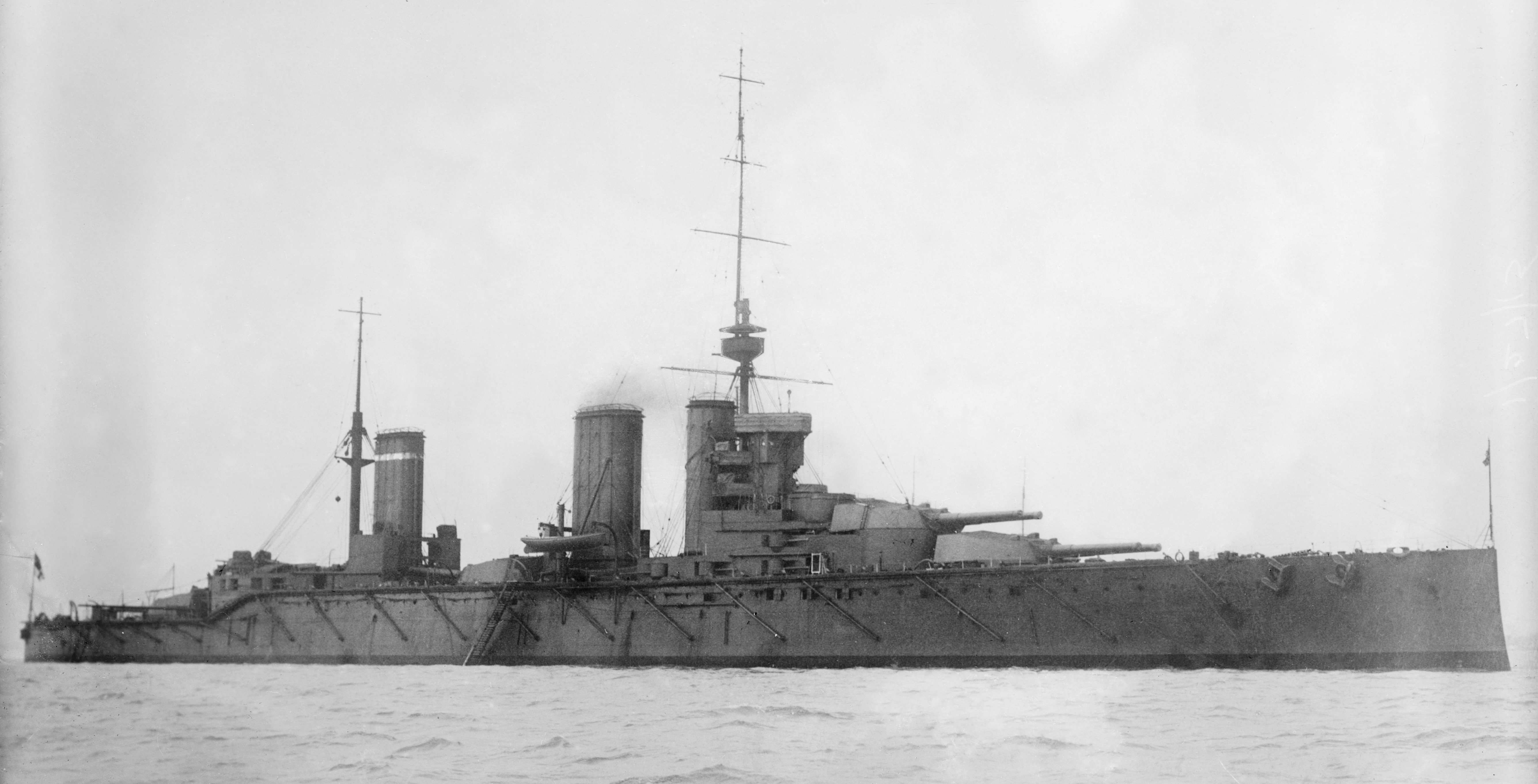
Vessel Wikidata
* This information from Wikidata is available under the Creative Commons Attribution-ShareAlike License
HMS Princess Royal was a Lion-class battlecruiser constructed for the Royal Navy, launched in 1911 and completed in 1913. This vessel measured approximately 700 feet (213.4 meters) in length, with a beam of 88 feet 6.75 inches (27 meters) and a deep load draft of 32 feet 5 inches (9.9 meters). It displaced around 26,270 long tons (26,690 tons) normally, increasing to over 30,800 long tons (31,310 tons) at deep load, reflecting its substantial size compared to earlier battlecruisers. Propulsion was provided by two pairs of Parsons direct-drive steam turbines housed in separate engine rooms, powered by 42 Yarrow boilers. Designed for 70,000 shp, she achieved speeds close to 28 knots (52 km/h), with trials in 1912 producing up to 78,803 shp and a maximum speed of 28.5 knots. Her operational range was approximately 5,610 nautical miles at 10 knots, supported by a bunker capacity of 3,500 long tons of coal and additional fuel oil. Armament included eight 13.5-inch (343 mm) Mk V guns arranged in four twin turrets, with secondary armament of 16 4-inch (102 mm) guns in casemates. The ship lacked initial anti-aircraft defenses but was later fitted with a 6-pounder Hotchkiss gun and a 3-inch AA gun during wartime. She also carried aircraft—Sopwith Pup and 1½ Strutter—on platforms atop turrets for reconnaissance and Zeppelin defense. The ship's armor featured a 9-inch (229 mm) waterline belt amidships, tapering toward the ends, with gun turrets protected by 8 to 9 inches of armor. The deck armor varied from 1 to 2.5 inches, with 2.5-inch nickel-steel torpedo bulkheads and 10-inch (254 mm) conning tower sides. After the Battle of Jutland, additional armor was added to vulnerable areas. During her service, HMS Princess Royal participated prominently in WWI, including the Battle of Heligoland Bight, the Battle of Dogger Bank, and the Battle of Jutland, where she was moderately damaged. Notably, she scored few hits but contributed to major fleet actions. Post-war, she served at Scapa Flow, then was assigned to the Atlantic Fleet before being placed in reserve and ultimately sold for scrap in 1923, her demolition completed in 1925. Her design represented a significant evolution in British battlecruiser development, emphasizing speed, armor, and firepower to counter contemporary German vessels.
This description has been generated using GPT-4.1-NANO based on the Vessel's wikidata information and then modified by ShipIndex.org staff.