
HMS Torbay
1940 T-class submarine
Vessel Wikidata
* This information from Wikidata is available under the Creative Commons Attribution-ShareAlike License
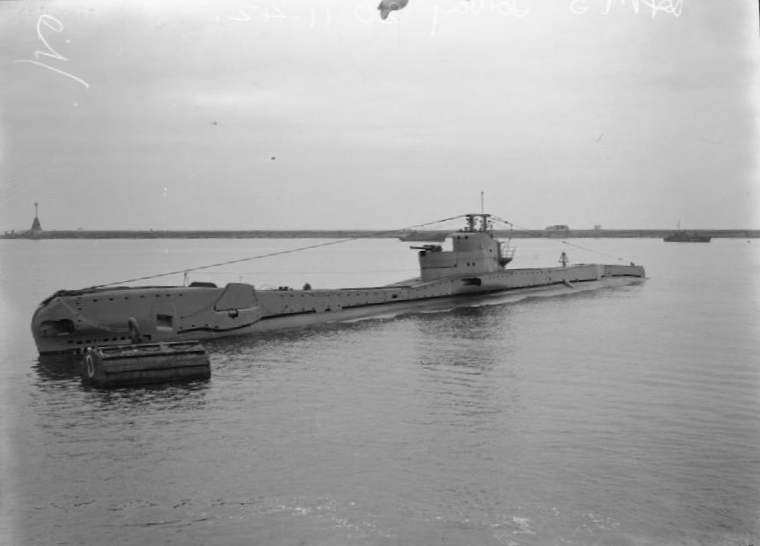
HMS Torbay (N79) was a T-class submarine of the Royal Navy, launched on 9 April 1940 at Chatham Dockyard. As a wartime vessel, she featured the typical design of the T-class, optimized for operations in confined waters with a robust hull and armament suitable for both offensive and patrol duties. Commissioned on 14 January 1941 under Lieutenant Commander Anthony Miers, she quickly became active in Mediterranean operations. Torbay’s service record is marked by a series of aggressive patrols and notable actions. She sank a total of 17 merchant ships, amounting to 38,000 tons, and engaged five warships and 24 sailing vessels. Her operational focus initially centered in the Mediterranean, where she conducted offensive patrols against Axis shipping, including attacks on Italian convoys off the Dardanelles and near Benghazi. Notably, she sank the Italian tanker Giuseppina Ghirardi during one such attack. A significant event in her career was her involvement in the daring evacuation of Allied personnel from Crete in August 1941, where she safely delivered 130 troops, including New Zealanders, British, and Australians, establishing a record for the number of personnel transported in a single submarine. During her Mediterranean patrols, Torbay also participated in special operations, including the ill-fated Operation Flipper, and engaged enemy vessels such as the Italian Sebastiano Veniero. In March 1942, Torbay achieved a remarkable feat at Corfu Harbour, firing torpedoes that almost certainly sank two supply ships while evading 40 depth charges, earning Lieutenant Commander Miers the Victoria Cross. Her encounters with Axis forces included close calls with German Q-ships, such as GA 45, which forced her to break off an attack. After returning to Britain in mid-1942 and then rejoining the Mediterranean in 1943, she continued offensive patrols and narrowly escaped damage during engagements. Later, she transferred to the Pacific Far East in 1945, where she sank Japanese sailing vessels and a coaster before the end of the war. Decommissioned and sold in December 1945, she was scrapped in 1947 at Briton Ferry, Wales. Throughout her service, HMS Torbay demonstrated the versatility and resilience of the T-class submarines, contributing notably to Allied naval efforts during World War II.
This description has been generated using GPT-4.1-NANO based on the Vessel's wikidata information and then modified by ShipIndex.org staff.