
HMS Erebus
1916 Erebus-class monitor
Vessel Wikidata
* This information from Wikidata is available under the Creative Commons Attribution-ShareAlike License
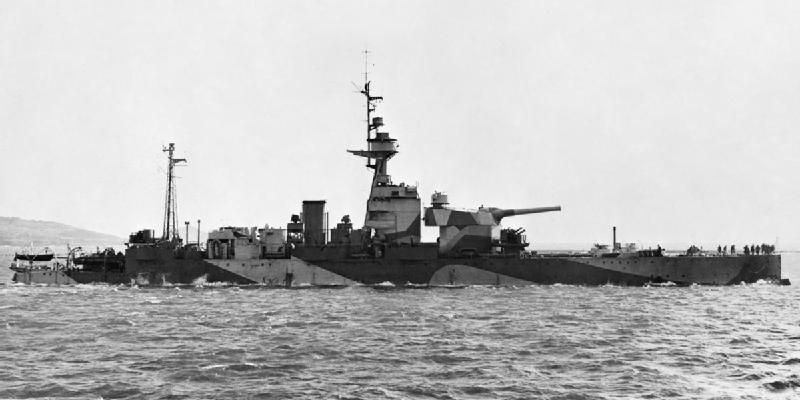
HMS Erebus was a First World War monitor launched on 19 June 1916, part of the Erebus class alongside her sister ship Terror. Designed as a shallow-draft, stable gun platform for close-inshore support, Erebus measured approximately 405 feet in length and 88 feet 2 inches in beam, with a draught of 11 feet 8 inches. Her displacement was around 8,450 long tons when fully loaded. The vessel was powered by four Babcock & Wilcox water-tube boilers driving triple-expansion steam engines, generating about 6,000 indicated horsepower, and achieving a maximum speed of approximately 13 knots. Her crew complement was around 204 personnel. Erebus's main armament consisted of two 15-inch (381 mm)/42 guns mounted in a single forward turret on a tall barbette, a turret originally intended as a spare for the battlecruiser Furious. The guns had an elevated firing range of up to 40,000 yards. The ship was heavily armored, with deck armor ranging from 1 inch on the forecastle to 4 inches over critical areas, and turret armor up to 13 inches thick on the front, designed to outrange German shore batteries. The hull featured anti-torpedo bulges, 13 feet wide, filled with water-tight compartments and steel tubes to absorb explosion impacts. Constructed by Harland and Wolff at Govan, Erebus was laid down in October 1915 and launched in June 1916. She conducted sea trials in September 1916, surpassing her sister in speed, and was commissioned shortly afterward. During WWI, she participated in bombardments of German naval forces at Ostend and Zeebrugge. Post-war, Erebus supported British operations in Russia and participated in gunnery trials against the German battleship SMS Baden. Throughout her service in WWII, Erebus saw active duty, supporting operations in the Mediterranean, the Atlantic, and during the Normandy landings. She was damaged several times, including during the attack on Trincomalee and the Sicily campaign, and was involved in bombardments at Le Havre and Walcheren. Decommissioned and scrapped in July 1946, Erebus’s notable armament and service record underscore her significance as a robust, if specialized, naval vessel designed for shore bombardment and support roles. It is believed that one of her 15-inch guns was later used on the Royal Navy’s last battleship, Vanguard.
This description has been generated using GPT-4.1-NANO based on the Vessel's wikidata information and then modified by ShipIndex.org staff.