
HMS Macedonian
1810 Lively-class fifth-rate frigate
Vessel Wikidata
* This information from Wikidata is available under the Creative Commons Attribution-ShareAlike License
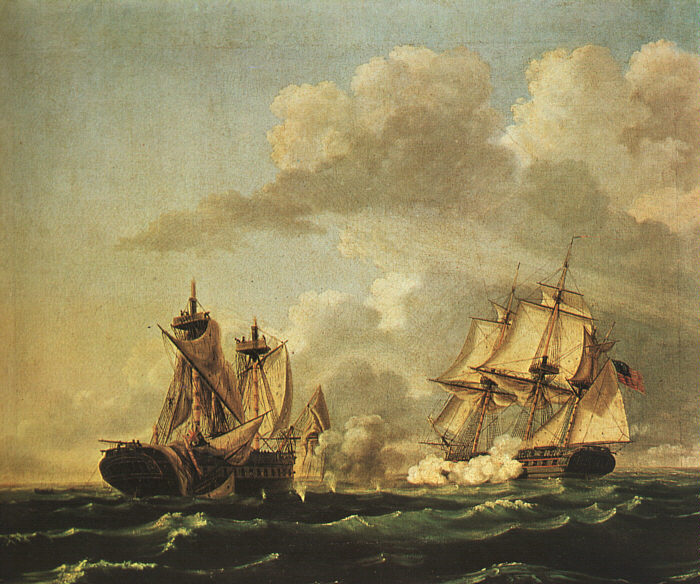
HMS Macedonian was a 38-gun fifth-rate frigate of the Royal Navy, belonging to the Lively class. Built at Woolwich Dockyard, England, she was launched on 2 June 1810 and commissioned shortly thereafter under the command of Captain Lord William FitzRoy. The vessel featured a typical frigate design of her class, armed with 24-pounder cannons, and served primarily in European waters and beyond. Initially, Macedonian's service included delivering soldiers to Lisbon and patrolling the Portuguese coast to guard against French naval threats. Her early career was marred by controversy when Captain FitzRoy was court-martialed for falsifying records of ships' stores, though he was later reinstated. Under subsequent commanders such as William Waldegrave and John Surnam Carden, the frigate undertook various missions, including secret dispatches to Virginia and cruising in the Atlantic. A notable event in her service occurred on 25 October 1812, when Macedonian encountered the USS United States off Madeira. The American heavy frigate, commanded by Captain Stephen Decatur, decisively engaged Macedonian, bringing down her masts and damaging her hull. After a fierce battle, Macedonian surrendered, becoming only the second Royal Navy vessel to fall to the Americans during the War of 1812. The United States then took her into service, retaining her name, and assigned her to patrol and combat operations along the American coast and in the Mediterranean. During her US Navy service, Macedonian participated in the Second Barbary War, aiding in the capture of Algerian vessels and maintaining American maritime interests in the Mediterranean. From 1819 to 1821, she operated along the South American coast, assisting merchant ships during regional conflicts. Later, she served in the West Indies to combat piracy and was eventually transferred to the Pacific station in 1826. Decommissioned in 1828, she was broken up at Norfolk Navy Yard, with her crew including notable figures such as William Henry Leonard Poe. Her captured ensign was displayed at the U.S. Naval Academy until 2018, symbolizing her historic significance.
This description has been generated using GPT-4.1-NANO based on the Vessel's wikidata information and then modified by ShipIndex.org staff.