
HMS Avon
1943 Diogo Gomes-class frigate
.jpg)
Vessel Wikidata
* This information from Wikidata is available under the Creative Commons Attribution-ShareAlike License
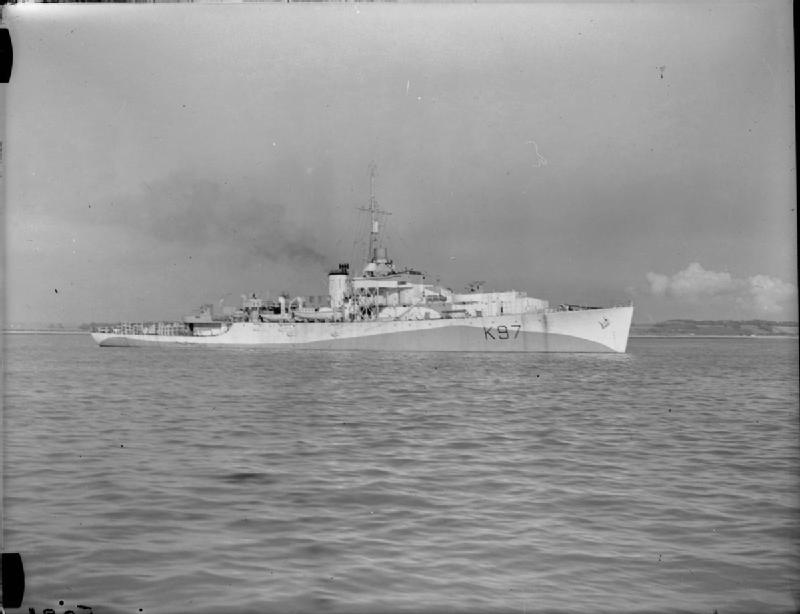
HMS Avon was a Group II River-class frigate built for the Royal Navy during World War II, designed to serve as an effective anti-submarine convoy escort. As one of 151 ships launched between 1941 and 1944, Avon embodied the innovative design principles of William Reed of Smith's Dock Company, combining the endurance and anti-submarine capabilities of the Black Swan-class sloops with the operational efficiency and ease of construction characteristic of the Flower-class corvettes. Constructed in civil dockyards, Avon was built with reciprocating steam engines, which facilitated quick and economical production. Physically, the River-class frigates like Avon were modest in size, optimized for convoy escort duties in various theaters. Avon served notably in the North Atlantic during WWII, where her primary role was protecting merchant convoys from German U-boats. In 1944, she was deployed to the Indian Ocean, where she notably rescued survivors from the torpedoed Norwegian freighter Tarifa, which was transporting Australian troops from North Africa to Australia. In 1945, Avon participated as part of Task Force 57 in the Battle of Okinawa, underscoring her operational versatility across different maritime theaters. After the war, Avon was paid off and placed in the Reserve Fleet until 1949, when she was sold to Portugal and renamed NRP Nuno Tristão. In Portuguese service, the ship continued to play a significant role, including carrying Emperor Haile Selassie of Ethiopia on a state visit from Bayonne to Portugal in July 1959 and supporting Portuguese military operations in Africa. The vessel served in the Portuguese Navy for approximately 21 years before being decommissioned in 1970. She was subsequently scrapped in Lisbon in 1972, marking the end of a distinguished service life that spanned multiple navies and significant historical events.
This description has been generated using GPT-4.1-NANO based on the Vessel's wikidata information and then modified by ShipIndex.org staff.