
HMS Telemachus
1943 T-class submarine
Vessel Wikidata
* This information from Wikidata is available under the Creative Commons Attribution-ShareAlike License
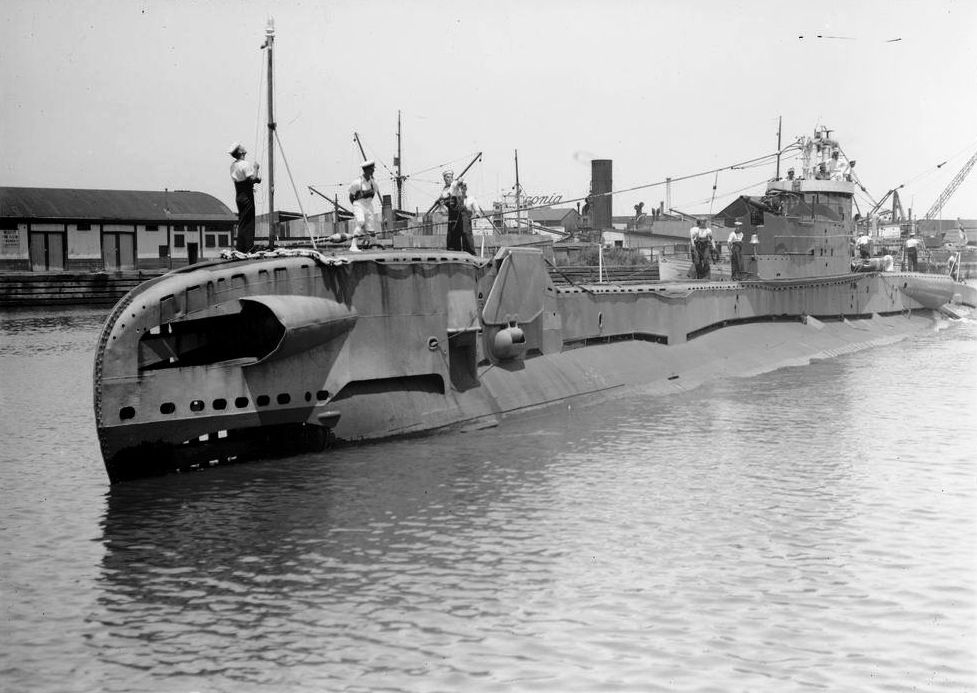
HMS Telemachus (P321) was a third-group British T-class submarine built by Vickers-Armstrongs at their Barrow yard, launched on 19 June 1943. As part of the T-class series, she was designed for wartime service, characterized by a robust hull and operational versatility. Named after the Greek mythological figure Telemachus, son of Odysseus, the vessel was primarily active in the Far Eastern theater during World War II. Telemachus arrived in the Far East in July 1944, serving with the Eastern Fleet based in Colombo. Her most notable wartime achievement was the sinking of the Japanese submarine I-166 in the Strait of Malacca on 17 July 1944. During this patrol, she sighted the I-166 at 07:08 hours, launching six torpedoes at a range of approximately 2,300 yards. An explosion was heard 94 seconds later, indicating a successful hit. The Japanese submarine sank, with only a few survivors from the I-166 crew. After the patrol, Telemachus transferred to the 8th Submarine Flotilla based in Fremantle, Western Australia. She participated in various operations, including the insertion of intelligence operatives into Japanese-held territories in October 1944. Post-war, the submarine continued her service, notably being based in Australia to support the Royal Australian Navy’s anti-submarine training efforts, especially after the acquisition of the aircraft carrier HMAS Sydney. Throughout her post-war career, Telemachus was refitted multiple times, including in Singapore and Japan, and participated in training exercises related to the Korean War. In 1956, she undertook a hydrographic survey off the Australian Antarctic Territory, covering approximately 7,500 miles. During this survey, she went missing for two and a half hours, prompting an extensive search before re-emerging. Decommissioned in December 1959, HMS Telemachus was scrapped at Charlestown on 28 August 1961. Her service record highlights her contributions to wartime operations, post-war training, and scientific surveys, marking her as a versatile and significant vessel in mid-20th-century naval history.
This description has been generated using GPT-4.1-NANO based on the Vessel's wikidata information and then modified by ShipIndex.org staff.