
Poltava
1911 Gangut-class battleship
Vessel Wikidata
* This information from Wikidata is available under the Creative Commons Attribution-ShareAlike License
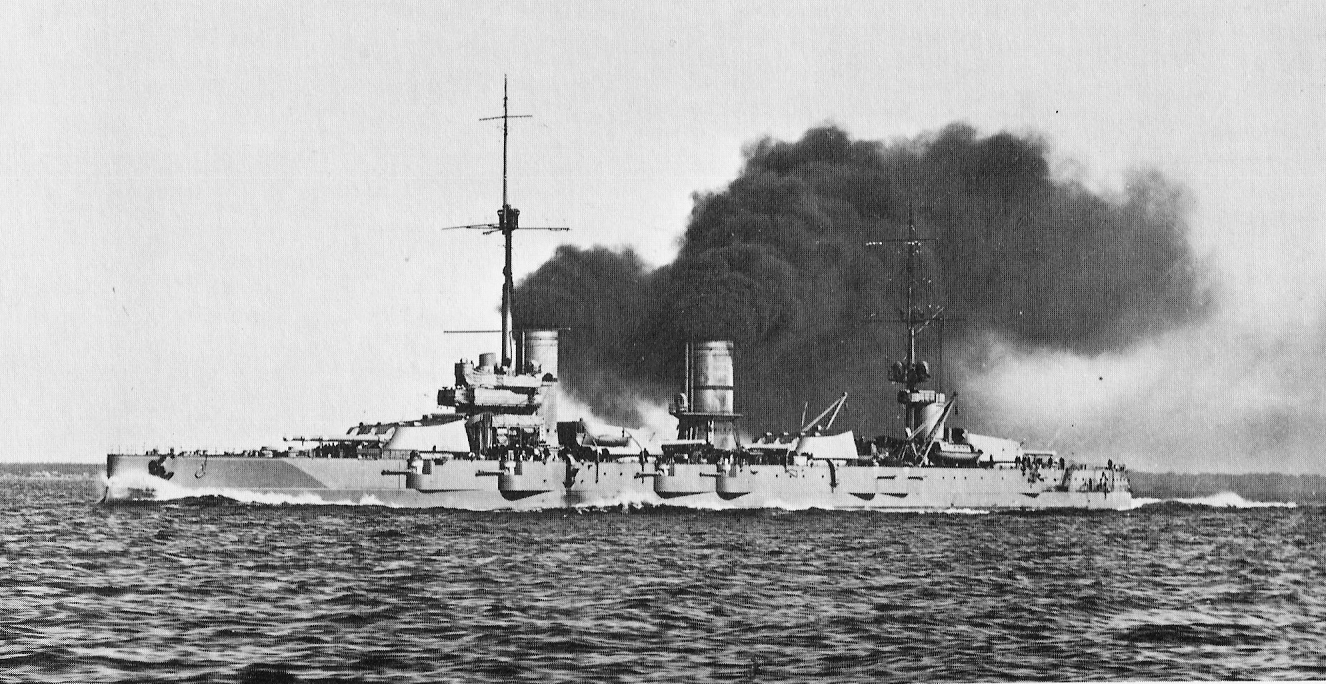
The Poltava was a prominent battleship of the Imperial Russian Navy, belonging to the Gangut class, which marked Russia's first dreadnoughts. Constructed at the Admiralty Shipyard in Saint Petersburg, she was laid down on June 16, 1909, and launched on July 23, 1911. The ship measured approximately 181.2 meters (594 feet) overall in length, with a waterline length of about 180 meters (590 feet). Her beam was 26.9 meters (88 feet), and she had a draft of 8.99 meters (29.5 feet), which was slightly deeper than designed. Displacing around 24,800 tonnes at full load, she exceeded her intended displacement by over 1,500 tonnes. Poltava's propulsion was powered by ten Parsons steam turbines, built by Franco-Russian Works, which drove four propellers. These turbines produced over 52,000 shaft horsepower during trials, allowing her to reach a top speed of 24.1 knots. Her machinery was fueled by twenty-five Yarrow boilers, capable of burning a mixture of coal and oil, providing her with an operational range of 3,500 nautical miles at 10 knots. The ship's main armament comprised twelve 12-inch (305 mm) Obukhovskii Pattern 1907 guns, mounted in four triple turrets distributed along her length. Her secondary armament included sixteen 4.7-inch (119 mm) guns in casemates, intended for defense against torpedo boats, with additional anti-aircraft guns likely added during the war. She also carried four submerged 17.7-inch (450 mm) torpedo tubes. Poltava entered service on December 30, 1914, and was assigned to the Baltic Fleet's First Battleship Brigade. During World War I, her role was primarily passive, aimed at defending the Gulf of Finland from German incursion—an objective the Germans never challenged directly. Notably, she ran aground in June 1916 but sustained minimal damage. Her crew participated in the 1917 February Revolution, and she evacuated Helsinki in March 1918 amidst the upheaval. Due to crew shortages, she was placed in long-term conservation in Petrograd in October 1918. Following her decommissioning, Poltava suffered a fire in November 1919, which gutted much of her interior. She was repurposed as a source of spare parts for her sister ships and was considered for various reconstruction projects, including conversion into an aircraft carrier, but these plans were ultimately abandoned. Renamed Frunze in 1926, she remained largely inactive, serving as a barracks hulk and being stripped for parts. During World War II, she was grounded again in July 1941 to prevent her sinking by German forces and was later used as a base for small ships during the Siege of Leningrad. She was raised in 1944 and scrapped starting in 1949. Some of her turrets and guns were repurposed for coastal defenses, and her remains have earned her the nickname "the world's longest battleship" in Russia, highlighting her long and varied history in naval service.
This description has been generated using GPT-4.1-NANO based on the Vessel's wikidata information and then modified by ShipIndex.org staff.