
Lexington
paddlewheel steamboat that operated along the Atlantic coast of the Northeastern United States between 1835 to 1840
Vessel Wikidata
* This information from Wikidata is available under the Creative Commons Attribution-ShareAlike License
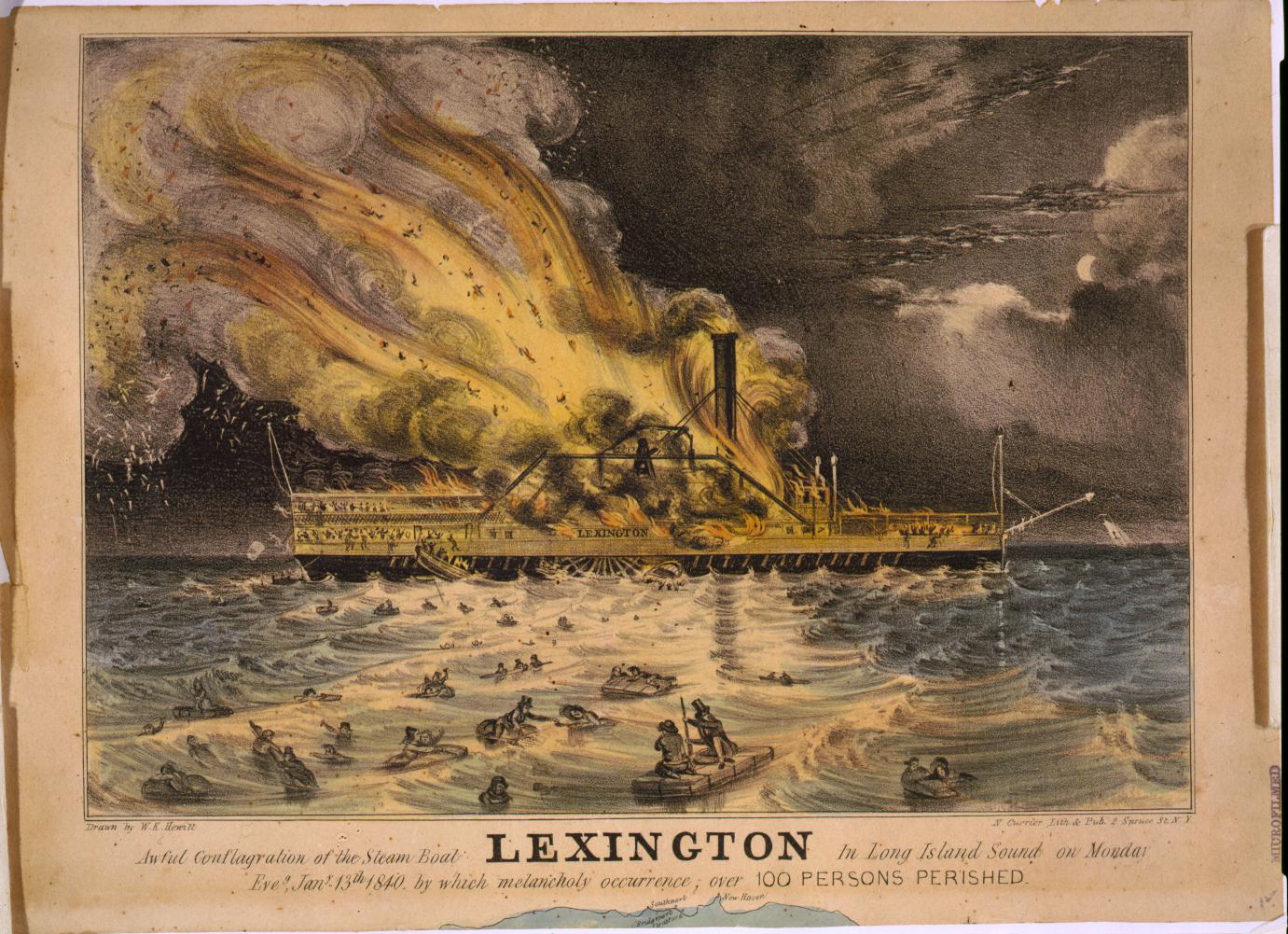
The Lexington was a notable paddlewheel steamboat operating along the Northeastern coast of the United States from 1835 to 1840. Commissioned by Cornelius Vanderbilt in early 1834, the vessel was constructed at the Bishop and Simonson Shipyards in New York, with its keel laid in September 1834. Instead of detailed plans, the ship's hull was modeled from a carved wooden model, then outlined and assembled based on these scaled drawings. Its engine, built at the West Point Foundry, was a highly efficient "walking beam" type, powered by a 48-inch-diameter steam cylinder with an 11-foot stroke. Measuring approximately 207 feet (63 meters) in length and weighing around 488 long tons (496 metric tons), the Lexington was one of the most luxurious steamers of its time. Its ornate teak deck railings, cabin doors, staircases, and interior panelling exemplified its opulence. The vessel featured a large cabin with a lounge and dining room, complemented by elegant lighting, curtains, and furniture. Initially serving as a day vessel between New York City and Providence, Rhode Island, in 1835, the Lexington later extended service to Stonington, Connecticut, in 1837, connecting to the Boston railroad network. The vessel was renowned for its speed, being the fastest route from New York to Boston during its operation. Tragically, on January 13, 1840, while en route from New York to Stonington with 143 passengers and crew and a cargo of cotton, the Lexington caught fire. The fire was caused by overheating due to improper conversion of its boilers from wood to coal, which led to a failure in safety protocols. The blaze quickly spread, igniting cotton stored nearby, and resulted in the loss of nearly all on board, with only four survivors. The disaster, Long Island Sound’s worst steamboat calamity, was marked by catastrophic failures in safety measures and crew response. The wreck now lies in 140 feet of water, broken into three sections, with reports of unclaimed gold and silver still on the seabed.
This description has been generated using GPT-4.1-NANO based on the Vessel's wikidata information and then modified by ShipIndex.org staff.