
HMS Caprice
1943 C-class destroyer
Vessel Wikidata
* This information from Wikidata is available under the Creative Commons Attribution-ShareAlike License
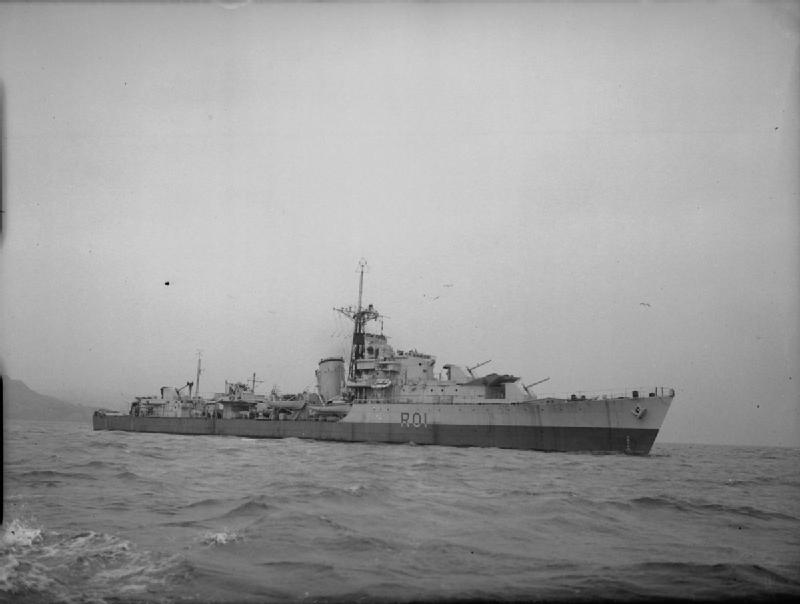
HMS Caprice was a C-class destroyer of the Royal Navy, built by Yarrow at Scotstoun and ordered on 16 February 1942. Originally designated to be named HMS Swallow, her name was changed to Caprice before her launch, making her the only British warship to bear this name. She was a warship of notable versatility, with a displacement typical of mid-20th-century destroyers, featuring a sleek, fast-profiled hull designed for fleet escort and patrol duties. On commissioning, HMS Caprice was assigned to the 6th Destroyer Flotilla with the Home Fleet. During World War II, she participated actively in Russian and Atlantic convoy escort missions, safeguarding vital troop transports such as the Queen Elizabeth and Île de France during their high-speed troop runs. Her service extended to the Far East in 1945, where she played a role in the closing stages of the Japanese War. Notably, she accepted the surrender of approximately 5,000 Japanese prisoners at Uleeheue. Post-war, Caprice entered reserve but was modernized in 1959 by Yarrow, which included the installation of a new enclosed bridge, a Mark 6M gunnery fire control system, and two triple Squid anti-submarine mortars. Following her refit, she joined the 8th Destroyer Flotilla in Singapore, serving in the Far East for four years. A significant rescue occurred in 1961 when Caprice responded to a distress signal from the Panamanian freighter SS Galatea, rescuing 20 crew members and earning two crew members Queen’s Commendations for Brave Conduct after the captain fell overboard and died during the rescue. Throughout the early 1960s, she served in the Mediterranean and Caribbean, including duties as a guard ship in Georgetown, Guyana, and patrols in the Bahamas. In 1966, Caprice was fitted with the Sea Cat anti-aircraft missile system, replacing her torpedo armament, marking her as one of only two Ca-class destroyers to receive this upgrade. Her service included participation in the Beira Patrol against Rhodesia’s oil embargo and support during the Aden Emergency, where her crew was wounded during a weapons demonstration. From 1968 to 1969, Caprice undertook a global deployment, visiting key ports including Gibraltar, Freetown, Simonstown, Japan, Australia, and New Zealand, before returning to Portsmouth in December 1969. She was decommissioned in 1973, the last wartime destroyer in service, and was eventually scrapped at Queenborough in 1979. Her career exemplified the adaptability and enduring service of mid-20th-century Royal Navy destroyers.
This description has been generated using GPT-4.1-NANO based on the Vessel's wikidata information and then modified by ShipIndex.org staff.