
HMS Contest
1944 C-class destroyer
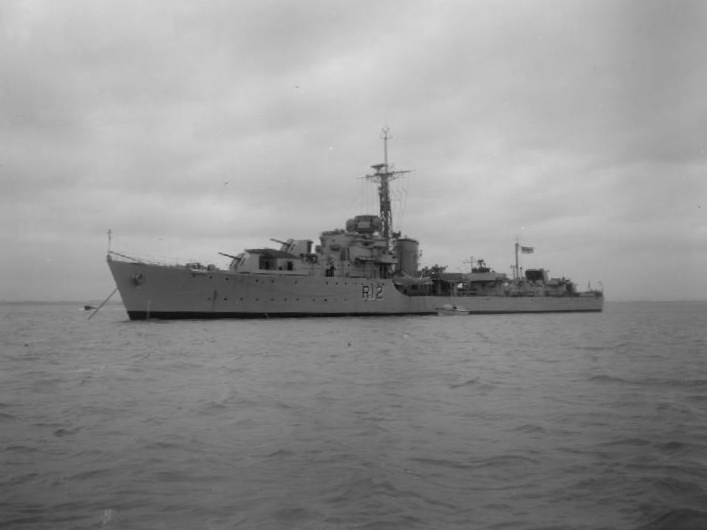
Vessel Wikidata
* This information from Wikidata is available under the Creative Commons Attribution-ShareAlike License
HMS Contest was a C-class destroyer of the Royal Navy, constructed by J. Samuel White in Cowes. She was laid down on November 1, 1943, and commissioned on November 9, 1945, notable for being the Royal Navy's first all-welded warship, a significant advancement in naval construction technology. The vessel measured typical dimensions for her class, optimized for versatility and combat capability, though specific size details are not provided in the summary. Upon commissioning, HMS Contest served with the 8th Destroyer Squadron in the Far East, reflecting her immediate deployment in post-World War II operations. In 1947, she was deployed to the Solomon Islands amid tensions surrounding the Maasina Ruru independence movement, serving as a deterrent during a period of regional unrest following the arrest of local leaders. Later that year, during a return voyage to the UK from the Far East, Contest and her sister ship Cockade were diverted to Aden in response to anti-Jewish rioting. During this crisis, crews from the destroyers and the survey ship Challenger were landed to assist in restoring order. In 1948, HMS Contest returned to the UK for a refit, during which she received an interim modernization and was fitted for minelaying operations, enhancing her versatility. By 1951, she served as a torpedo training ship at Portsmouth, indicating a shift toward training and support roles. Subsequently, she joined the 6th Destroyer Squadron in the Home Fleet, maintaining a presence in European waters. In 1953, HMS Contest participated in the Coronation Review of the Fleet, a ceremonial event marking the coronation of Queen Elizabeth II. The vessel was paid off in the late 1950s, marking the end of her active service. She was sold for scrap and arrived at Thos. W. Ward Grays, Essex, for dismantling on February 2, 1960. Overall, HMS Contest's career reflects the transitional period of post-war naval operations, technological innovations, and the Royal Navy's global presence during the late 1940s and early 1950s.
This description has been generated using GPT-4.1-NANO based on the Vessel's wikidata information and then modified by ShipIndex.org staff.