
USS Cachalot
1933 V-boat
Vessel Wikidata
* This information from Wikidata is available under the Creative Commons Attribution-ShareAlike License
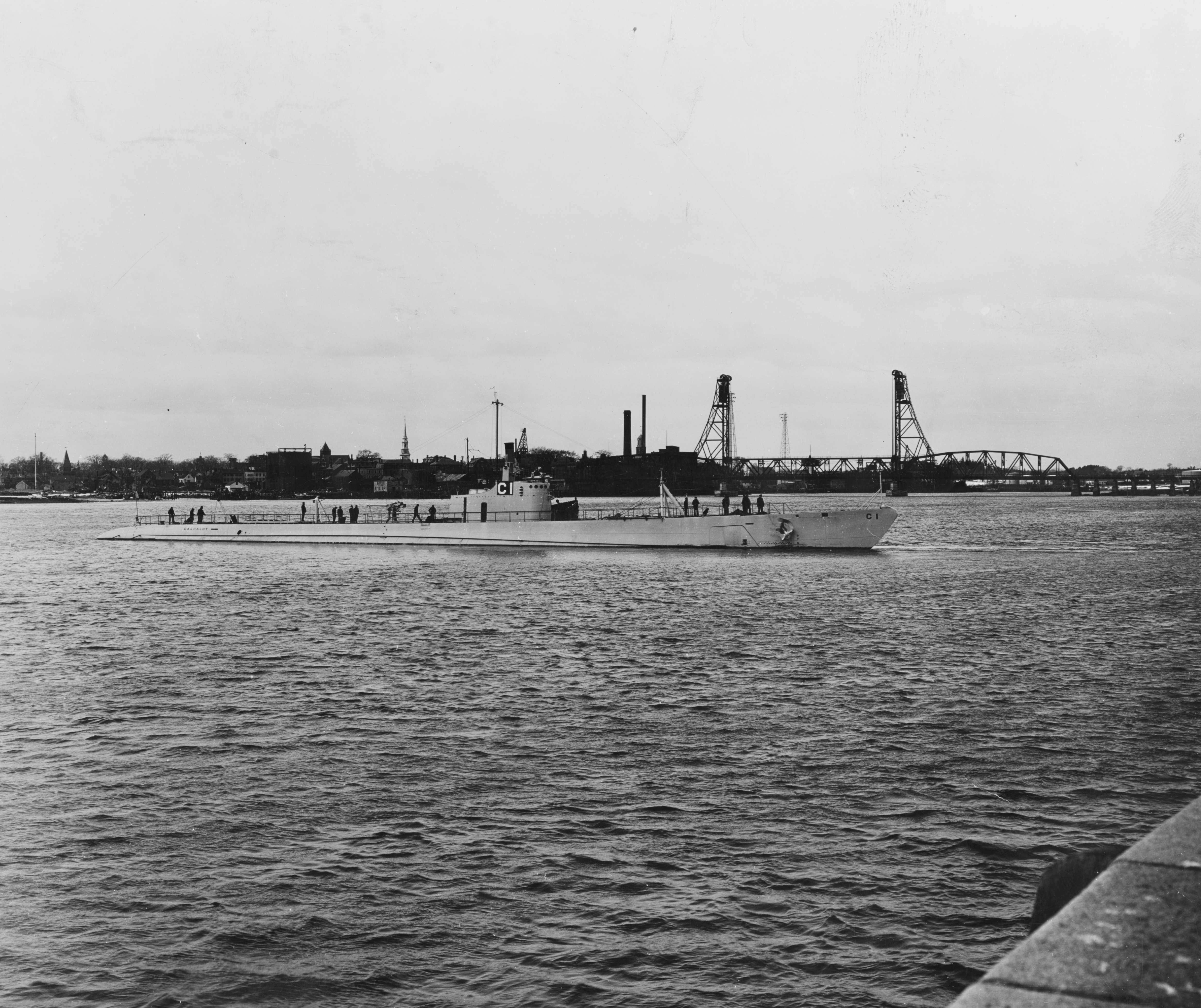
The USS Cachalot (SC-4/SS-170) was the lead vessel of the United States Navy's V-class submarines, constructed by the Portsmouth Navy Yard. Launched on October 19, 1933, and commissioned on December 1 of the same year under the command of Lieutenant Commander Merril Comstock, she represented a significant step in early U.S. submarine design. Named after the sperm whale, the Cachalot was notable for being the first submarine equipped with the Torpedo Data Computer, Mark 1, developed by Arma Corporation. Constructed with a conservative design approach, the vessel's hull featured riveting in both the inner and outer hulls, with welded components in non-critical areas such as the superstructure and piping brackets. Her design was constrained by the London Naval Treaty of 1930, limiting her size and endurance, which impacted her operational range. Powered initially by two BuEng MAN-designed M9Vu 40/46 nine-cylinder diesel engines, she experienced engine troubles leading to a 1937-38 replacement with General Motors Winton 16-278 engines, enhancing her reliability. Cachalot’s early service concentrated on the U.S. West Coast, participating in fleet problems, torpedo practice, and antisubmarine exercises, including cruises to Hawaiian waters and the Panama Canal Zone. She later transferred to the East Coast for experimental torpedo firing and sonar training at Newport and New London. In 1939, she returned to Pearl Harbor for duty with the Submarine Force and Scouting Force. During World War II, the Cachalot was present in Pearl Harbor during the Japanese attack in December 1941, sustaining no damage but suffering minor injuries among her crew. She conducted three war patrols, including reconnaissance missions in the Central Pacific and offensive operations near the Japanese home islands, where she damaged a tanker. Her final patrol took her into the frigid Bering Sea supporting Aleutian Islands operations. Due to her age and limited endurance, she was reassigned as a training vessel at New London from late 1942 until her decommissioning on October 17, 1945. The vessel was sold for scrap in January 1947, marking the end of her service.
This description has been generated using GPT-4.1-NANO based on the Vessel's wikidata information and then modified by ShipIndex.org staff.