
HMS Chaser
1942 Attacker-class escort carrier
Vessel Wikidata
* This information from Wikidata is available under the Creative Commons Attribution-ShareAlike License
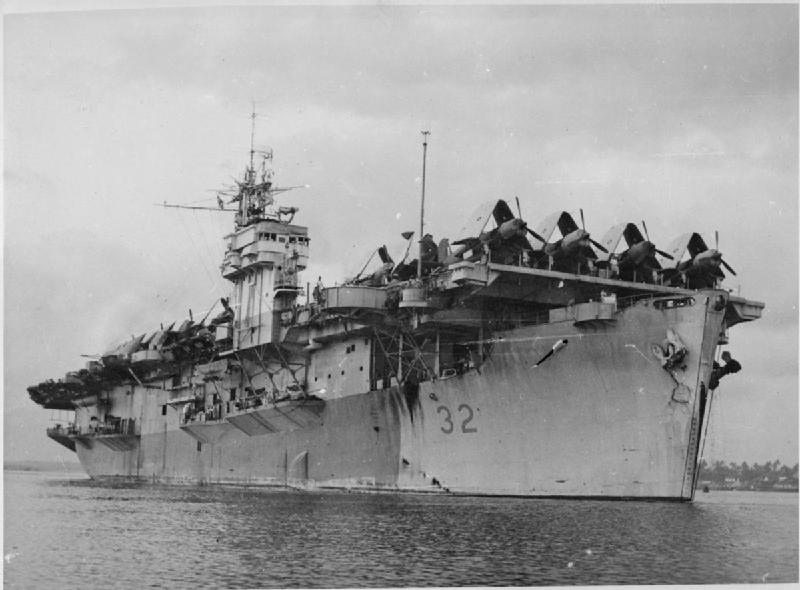
HMS Chaser (D32/R306/A727) was an American-built Attacker-class escort carrier that served with the Royal Navy during the Second World War. Originally laid down on 28 June 1941 as Mormacgulf by Ingalls Shipbuilding in Pascagoula, Mississippi, she was initially intended for the U.S. Maritime Commission under contract MC hull 162. Her name was changed to Mormacdove later that year. She was launched on 19 June 1942, sponsored by Mrs. Eugene T. Oates. Following her acquisition by the U.S. Navy, she was renamed Breton and classified as AVG-10, later reclassified as ACV-10, and finally CVE-10. Under the Lend-Lease agreement, she was transferred to the Royal Navy and commissioned as HMS Chaser on 9 April 1943. HMS Chaser measured approximately 495 feet 8 inches (151.08 meters) in length, with a beam of 69 feet 6 inches (21.18 meters) and a draught of 24 feet 8 inches (7.52 meters). She displaced around 14,170 long tons (14,400 tonnes) at full load. Her propulsion system comprised two boilers feeding steam to a turbine driving a single shaft, delivering 8,500 shaft horsepower, which propelled her at a maximum speed of 18 knots (33 km/h). The ship could carry up to 24 aircraft, including anti-submarine and fighter aircraft such as Hawker Sea Hurricanes, Supermarine Seafires, and American aircraft like Grumman Martlets and F4U Corsairs. Her flight deck spanned 450 feet by 120 feet, with two aircraft lifts and nine arrestor wires, and she had a below-deck hangar of 260 feet by 62 feet for storing additional aircraft. When used as a transport, she could carry up to 90 aircraft. Her armament focused on anti-aircraft defense, with eight 40 mm Bofors guns, ten 20 mm Oerlikon cannons, and two 4-inch guns. Designed primarily for convoy escort and anti-submarine warfare, HMS Chaser operated aircraft such as Swordfish and later Avengers to hunt U-boats, with her aircraft conducting patrols and attacks to protect Allied convoys. She also provided logistical support by refueling destroyers underway. During her service, Chaser participated in Arctic convoy operations, notably escorting convoys to Russia, where her aircraft engaged German U-boats and aircraft, contributing to the Allied efforts in the Battle of the Atlantic. After repairs following a boiler explosion in July 1943 and subsequent modifications, she served in the Western Approaches and later joined the British Pacific Fleet in 1945. In the Pacific, she ferried aircraft and supplies supporting operations such as the invasion of Okinawa and the occupation of Japan. Following the war's end, she transported Allied prisoners of war homeward. After her wartime service, HMS Chaser was returned to the U.S. Navy in 1946, struck from the naval register, and sold for civilian use. Renamed Aagtekerk, she later became E Yung, and ultimately foundered in 1972 before being salvaged and scrapped in Taiwan. Her service exemplifies the versatility and importance of escort carriers in mid-20th-century naval warfare.
This description has been generated using GPT-4.1-NANO based on the Vessel's wikidata information and then modified by ShipIndex.org staff.