
HMS Bonne Citoyenne
1794 Bonne Citoyenne-class corvette
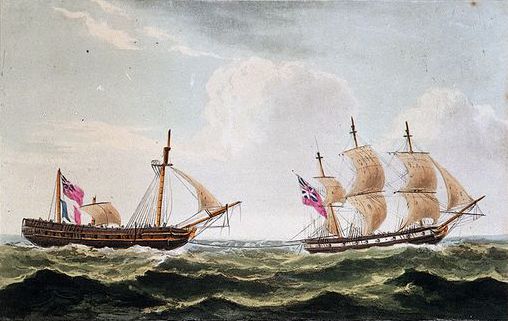
Vessel Wikidata
* This information from Wikidata is available under the Creative Commons Attribution-ShareAlike License
HMS Bonne Citoyenne was a 20-gun corvette originally constructed for the French Navy and launched in 1794. As the lead ship of her four-vessel class, she featured a design that served as the basis for later Hermes-class post ships. Built and launched in 1794, Bonne Citoyenne was commissioned in 1795 and initially operated in the Bay of Biscay and the English Channel. Her early service included patrolling and convoy escort duties, during which she encountered and was damaged in a storm, leading to her separation from a French squadron en route to Île de France. Captured by the British Royal Navy in March 1796 off Cape Finisterre by HMS Phaeton under Robert Stopford, she was subsequently commissioned as HMS Bonne Citoyenne. Under British command, her service was extensive, including participation in the Battle of Cape St Vincent in 1797, where she signaled the fleet upon sighting the French fleet. She shared in the prize money from this engagement and was involved in chasing and engaging Spanish and French vessels in the Mediterranean, often capturing merchant ships and privateers. Her notable achievements include the capture of the French frigate Furieuse on 6 July 1809, after an intense seven-hour battle. Despite being outgunned and damaged, Bonne Citoyenne’s crew succeeded in forcing Furieuse’s surrender, earning her commanding officer, William Mounsey, a promotion and a gold medal from the Admiralty. Bonne Citoyenne also served in South America, notably at the River Plate, and was involved in the blockade of French-held Malta in 1800, sharing in numerous prize captures. Throughout her career, Bonne Citoyenne was active in major operations across the Mediterranean, Atlantic, and South American stations. She was laid up in 1815 and sold in 1819 for £1,550. Her service record reflects her significant role in naval campaigns during the late 18th and early 19th centuries, with her design influencing future ship classes and her actions earning her notable recognition within the Royal Navy.
This description has been generated using GPT-4.1-NANO based on the Vessel's wikidata information and then modified by ShipIndex.org staff.