
HMS Carysfort
1914 C-class light cruiser
Vessel Wikidata
* This information from Wikidata is available under the Creative Commons Attribution-ShareAlike License
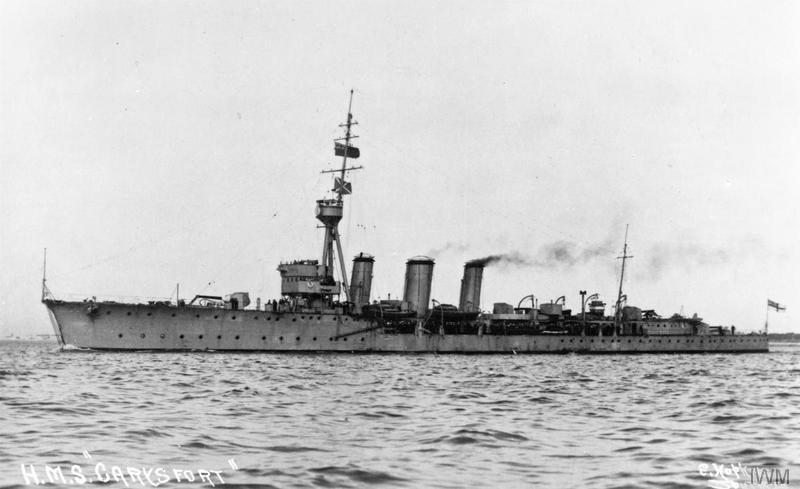
HMS Carysfort was a C-class light cruiser of the Caroline sub-class, constructed during the early years of World War I. She was laid down either at Pembroke Dockyard or Hawthorn Leslie on 25 February 1914, launched on 14 November 1914, and completed in June 1915. The vessel measured approximately 446 feet in length overall, with a beam of 41 feet 6 inches and a mean draught of 16 feet. Displacing around 4,219 long tons at normal load, her design prioritized fleet escort and defense against enemy destroyers. She was powered by four Brown-Curtis steam turbines, generating 40,000 shaft horsepower and enabling a maximum speed of 28.5 knots. Her armament comprised two BL six-inch guns on the centerline, eight four-inch guns, a single 13-pounder AA gun (later replaced by a three-pounder), and two twin 21-inch torpedo tubes. Protective features included a waterline belt up to 3 inches thick and a 1-inch deck, with the conning tower walls 6 inches thick. During her service in World War I, HMS Carysfort was assigned to the Grand Fleet, Harwich Force, and Dover Patrol, often serving as a flagship. Her notable operations included patrolling the North Sea and the English Channel, participating in short engagements with German torpedo boats, and escorting merchant shipping. She was involved in the search for German cruisers and was present during various fleet movements, though she did not see major combat at Jutland. A notable episode occurred on the night of 22 July 1915 when she was flagship of Commodore Tyrwhitt, leading patrols in the North Sea. She also participated in patrols off Norway and the Irish coast, and was briefly involved in the response to the Irish Civil War and the Chanak Crisis in Turkey. Post-war, HMS Carysfort was transferred to the Home and Atlantic Fleets, before being placed in reserve in 1923. She later ferried troops to China and served as the flagship of the Devonport Reserve. Decommissioned in 1931, she was subsequently sold for scrap, marking the end of her maritime service. Her operational history reflects her role as a versatile, active cruiser engaged in patrols, escort duties, and fleet support during a transformative period of naval warfare.
This description has been generated using GPT-4.1-NANO based on the Vessel's wikidata information and then modified by ShipIndex.org staff.