
SMS Novara
Austrian frigate
Vessel Wikidata
* This information from Wikidata is available under the Creative Commons Attribution-ShareAlike License
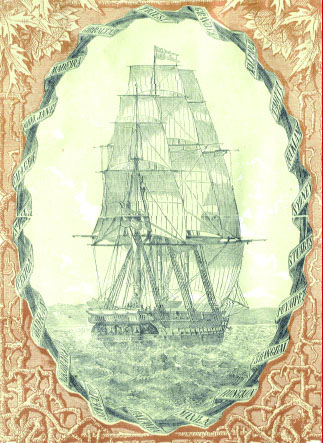
SMS Novara was a notable sail frigate of the Austro-Hungarian Navy, primarily distinguished by its extensive scientific expedition and its role in maritime history. Constructed beginning in 1843 in Venice, the vessel's early development was marked by multiple name changes and configurations. Originally named Minerva, it was renamed Italia in 1848 by Venetian revolutionaries, and finally launched as SMS Novara in 1850, named after the Battle of Novara in 1849. The ship’s hull was completed in November 1850, and it was originally a sailing frigate with three masts and six decks, equipped with 42 cannons, and displaced approximately 2,107 tons. The vessel's most significant achievement was its circumnavigation of the Earth during the Austrian Imperial expedition from April 1857 to August 1859. Under the command of Commodore Bernhard von Wüllerstorf-Urbair, SMS Novara carried a crew of 345 officers and sailors, along with seven scientists. The expedition was a pioneering scientific voyage, involving naturalists who collected vast botanical, zoological, and geological specimens, and conducted groundbreaking oceanographic and geomagnetic research. Notably, the expedition facilitated the first investigation of coca plants and their potential for isolating cocaine, as well as geological mapping in New Zealand. The scientific data collected was compiled into a comprehensive 21-volume report that significantly contributed to natural sciences and oceanography. In addition to its scientific pursuits, SMS Novara played a diplomatic and military role. In May 1864, it transported Archduke Maximilian and his wife Carlota to Veracruz, Mexico, to assume the throne as Emperor and Empress of Mexico. The frigate also participated in the Battle of Lissa in 1866, a decisive naval engagement in the Adriatic Sea, where it was part of Austria's fleet and saw combat during the historic battle. Hulking in 1881, SMS Novara served as a training ship until it was broken up 18 years later. Its legacy endures, symbolized by its depiction on a commemorative coin and its recognition as the first Austrian vessel to circumnavigate the globe, marking its importance in maritime and scientific history.
This description has been generated using GPT-4.1-NANO based on the Vessel's wikidata information and then modified by ShipIndex.org staff.