
Atago Maru
merchant ship

Vessel Wikidata
* This information from Wikidata is available under the Creative Commons Attribution-ShareAlike License
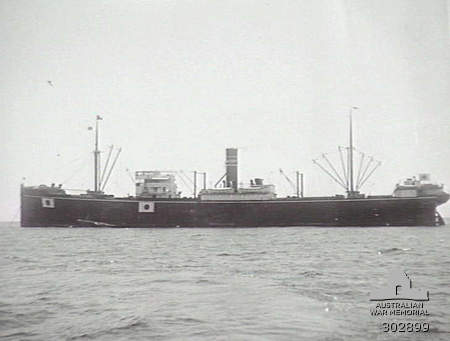
Atago Maru was a Japanese merchant vessel constructed in Glasgow in 1924 by Lithgows & Sons, bearing yard number 762. As one of the first diesel-powered cargo ships registered in Japan, she measured approximately 7,543 gross register tons (GRT) and was 134.1 meters (440 feet) long between perpendiculars, with a beam of 17.4 meters (57 feet 1 inch). Her propulsion consisted of twin Sulzer diesel engines driving two screws, delivering a maximum speed of 13 knots (24 km/h). Originally designed as a general cargo freighter for Nippon Yusen, Atago Maru operated primarily on routes between Kobe or Yokohama and the west coast of North America, notably serving the Seattle route successfully. In 1942, she was converted into an oil tanker at Sasebo Naval Arsenal, reflecting her strategic military role during World War II. After conversion, she resumed service, participating in multiple convoys across the Pacific. Her wartime operations included transporting oil and supplies from various Japanese ports, including Cap St Jacques, Takao, and Manila, often under threat from Allied submarine attacks. Her service was marked by continuous engagement in convoy battles, with the ship surviving multiple perilous situations until her sinking. On 28 November 1944, while anchored off Borneo near the Lutong refinery, Atago Maru was bombed and sunk by United States Army Air Forces B-24 Liberator bombers. The wreck now lies upright in about 14 meters (46 feet) of water approximately one mile offshore. Initially, much of her superstructure remained visible above the water, but subsequent waves destroyed much of the remaining structure, causing the ship to settle into the seabed mud. The site has become a popular diving destination, with her masts visible until the 1980s, serving as a maritime relic of Japan’s wartime merchant fleet and illustrating the extensive wartime convoy system and maritime hazards faced during the Pacific theater of World War II.
This description has been generated using GPT-4.1-NANO based on the Vessel's wikidata information and then modified by ShipIndex.org staff.