
HMS Ladybird
1916 Insect-class gunboat
Vessel Wikidata
* This information from Wikidata is available under the Creative Commons Attribution-ShareAlike License
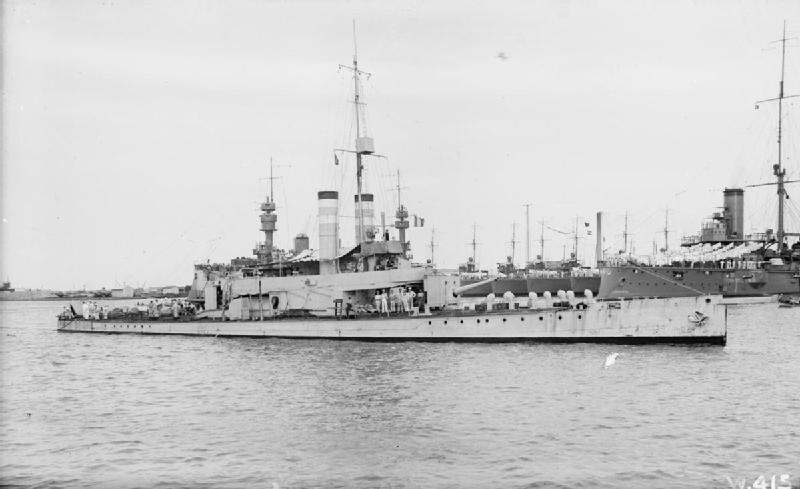
HMS Ladybird was an Insect-class gunboat of the Royal Navy, launched in 1916. Known as a "large China gunboat," she was originally built for river patrols during World War I, with design specifications suited for navigating inland waterways rather than open seas. Her construction details, such as her dimensions and armament, reflect her purpose as a formidable river patrol vessel, although specific measurements are not provided in the available content. Initially, HMS Ladybird was deployed to patrol the River Danube during the First World War. In 1927, she was transferred to China, sailing from Malta to serve on the Yangtze River. Her service on the Yangtze included involvement in the Panay incident of December 1937, when she, along with HMS Bee, came under Japanese artillery fire near Wuhu. During this engagement, Ladybird was hit by six shells but sustained only minor damage and assisted in rescuing survivors from the USS Panay, which had been sunk. In 1939, her armament was modernized with the replacement of her original 6-inch (152 mm) Mk VII guns with newer 6-inch Mk XIII (50-calibre) guns, taken from the decommissioned battleship HMS Agincourt, enhancing her firepower. Her later service was focused on the Mediterranean and North Africa during World War II. Allocated to Singapore in 1940, she was subsequently towed to the Mediterranean, where she was damaged en route, limiting her speed to 7 knots. She participated in the Battle of Bardia in Libya in early 1941, supporting Allied operations with shore bombardments. In February 1941, she landed Royal Marines during Operation Abstention on Kastelorizo, an unsuccessful attempt to seize the Italian-held island. Later, she supported the garrison at Tobruk by shelling Gazala airfield and ferrying supplies. However, on 12 May 1941, HMS Ladybird was severely damaged by dive bombers, caught fire, and settled on the seabed in shallow water, remaining afloat but immobilized. Her 3-inch gun was used as an anti-aircraft weapon afterward, but she was effectively rendered inoperative, and HMS Gnat took over her duties in the region. HMS Ladybird’s service history highlights her versatility and resilience, from river patrols to active combat roles in the Mediterranean during World War II, marking her as a significant vessel within the Royal Navy’s wartime fleet.
This description has been generated using GPT-4.1-NANO based on the Vessel's wikidata information and then modified by ShipIndex.org staff.