
HMCS Trillium
1940 Flower-class corvette
Vessel Wikidata
* This information from Wikidata is available under the Creative Commons Attribution-ShareAlike License
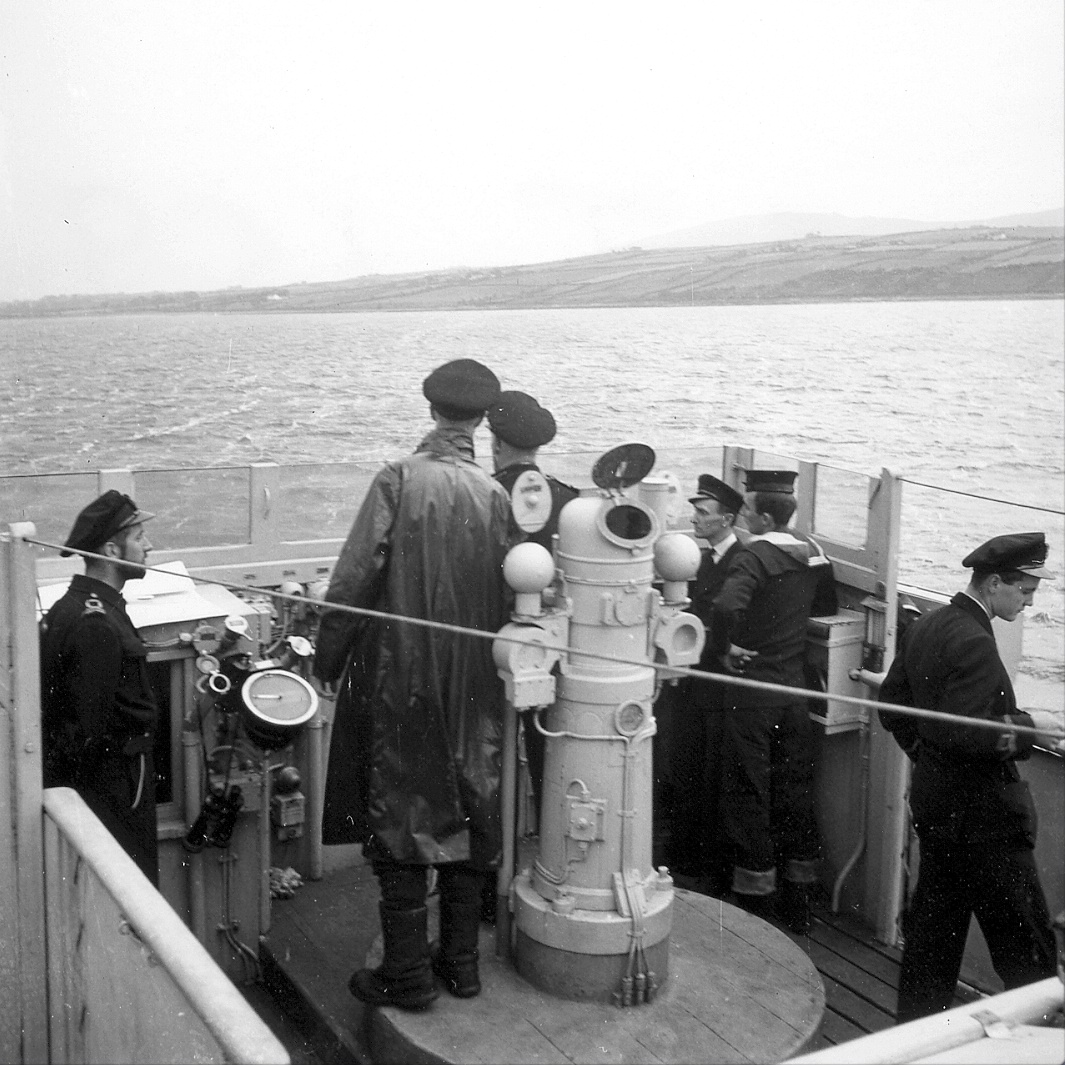
HMCS Trillium was a Flower-class corvette that served prominently in the Royal Canadian Navy during the Second World War, primarily functioning as a convoy escort in the Battle of the Atlantic. Originally ordered on 20 January 1940 for the Royal Navy as part of the 1939-1940 Flower-class building program, she was laid down by Canadian Vickers Ltd. in Montreal on 20 February 1940 and launched on 26 June 1940. She was commissioned into the Royal Navy on 31 October 1940 in Montreal and subsequently sailed to the United Kingdom, where she was fully fitted out at Greenock by March 1941. Trillium was one of ten corvettes loaned to Canada on 15 May 1941. Distinct from other Canadian Flower-class ships, she lacked minesweeping gear and was uniquely characterized by the siting of her after gun tub amidships. She underwent four significant refits during her wartime service. Her first refit occurred at Lunenburg, Nova Scotia, beginning in August 1941 and lasted three months. She later received overhaul at Galveston from April to June 1942, and her fo'c'sle was extended at Boston between April and June 1943. The final refit took place at Pictou, Nova Scotia, starting in late April 1944, followed by repairs in Halifax. Her operational career included assignments with Newfoundland Command and later with the Mid-Ocean Escort Force (MOEF), where she participated in major convoy battles such as SC 100, ON 166, and SC 121. Notably, in April 1941, she rescued 24 survivors from the torpedoed British merchant Empire Endurance, and in February 1943, she rescued 158 survivors from multiple torpedoed ships. She also experienced a collision while escorting convoy ON 278, which necessitated repairs. HMCS Trillium was returned to the Royal Navy on 27 June 1945 and was sold in 1947 for conversion to a whale-catcher. Her post-war career saw her renamed Olympic Winner, then Otori Maru No. 10, and later Kyo Maru No. 16, before being broken up in 1971. Her service history highlights her importance as an ocean escort during critical naval campaigns in the Atlantic, making her a notable example of the Flower-class corvettes' vital role in WWII maritime warfare.
This description has been generated using GPT-4.1-NANO based on the Vessel's wikidata information and then modified by ShipIndex.org staff.