
HMS Hindostan
1804 fourth-rate ship of the line
Vessel Wikidata
* This information from Wikidata is available under the Creative Commons Attribution-ShareAlike License
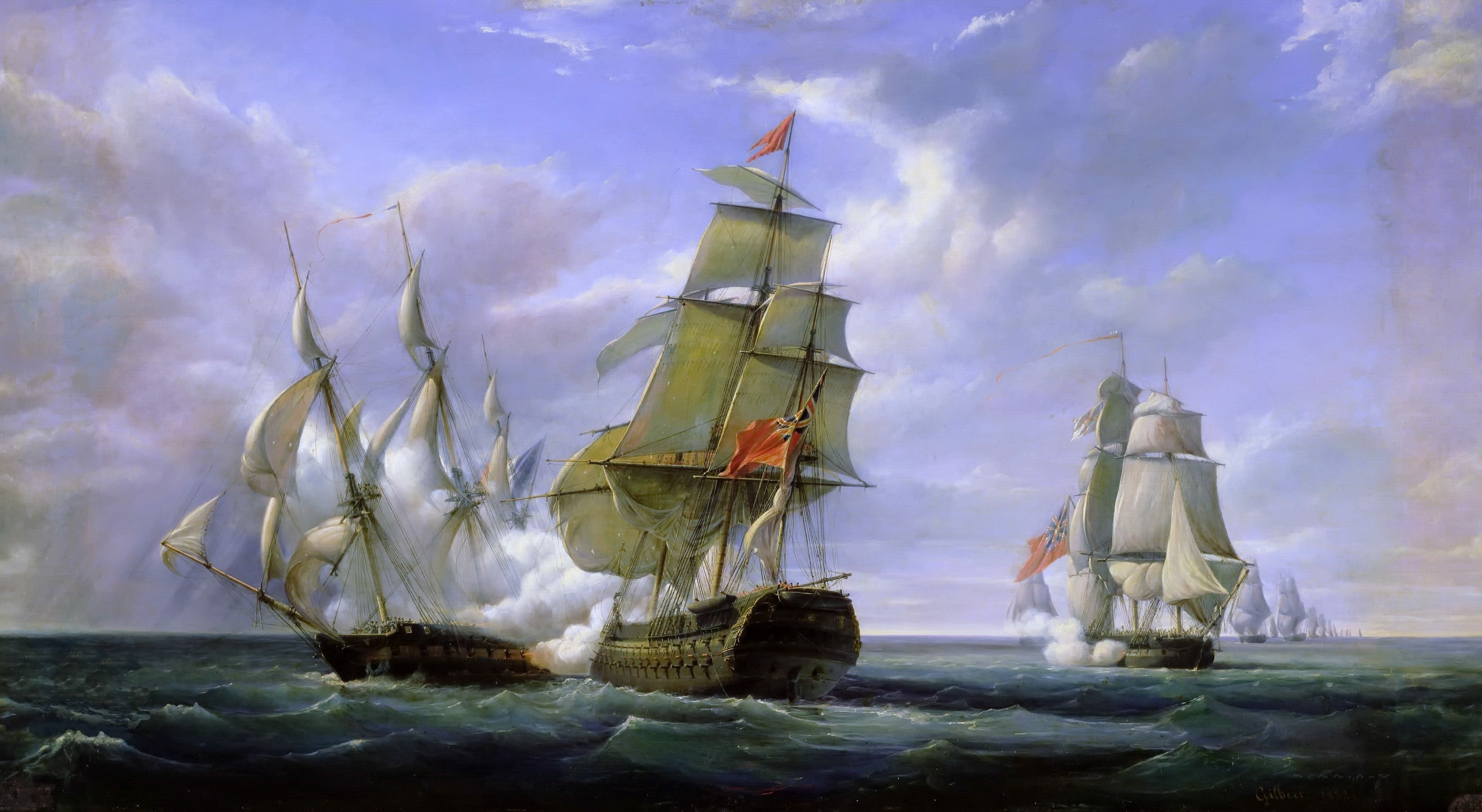
HMS Hindostan was a 50-gun, two-decker fourth-rate ship of the Royal Navy, originally built as the teak-hulled East Indiaman Admiral Rainier in Calcutta in 1799. Constructed by Hudson, Bacon & Co., she was launched in 1799 and immediately chartered by the British East India Company (EIC) for voyages between Calcutta and England. She made two notable trips to England under Captain William Lay, arriving at Deptford in October 1800 and again in September 1803, after which she was admitted to the British registry in January 1801 and received a Letter of Marque. In May 1804, the Admiralty purchased her, renaming her HMS Hindostan, shortly after the loss of an earlier vessel with the same name. Initially commissioned in July 1804, she served in various roles, including combat. Under Captain Alexander Fraser, she participated in the inconclusive Action of 21 April 1806 off the coast of France, fighting alongside HMS Tremendous against a French vessel. Subsequently, she was recommissioned in December 1806 under Captain Bendall Littehalles and underwent repairs at Woolwich in early 1807. By February 1807, Captain Thomas Bowen took command, and Hindostan served as a convoy escort to the Mediterranean. In November 1807, she was ordered to be converted into a storeship, reducing her armament from 54 to 22 guns by removing her lower deck artillery. Commander Lewis Hole assumed command in December, and in 1808, she operated off Lisbon as part of a squadron. In March 1809, Hindostan was recommissioned as a troopship under Commander John Pasco. She played a key role in transporting Governor Lachlan Macquarie and British troops to New South Wales in 1809, arriving in December to restore authority after the Rum Rebellion. She returned to England in May 1810. The vessel was converted into a storeship in 1811 and participated in the War of 1812, sharing in captures at Gibraltar in 1812. Renamed Dolphin in 1819, she was hulked at Woolwich in 1824 to serve as a prison ship. She suffered a leak and sank in 1829 but was refloated and repaired. Renamed Justitia in 1831, she remained in service until finally being sold in 1855. Throughout her career, HMS Hindostan/Dolphin/Justitia exemplified the versatility and longevity of ships built for the British maritime and military needs during the late 18th and early 19th centuries.
This description has been generated using GPT-4.1-NANO based on the Vessel's wikidata information and then modified by ShipIndex.org staff.