
HMS Modeste
1759 third-rate ship of the line
Vessel Wikidata
* This information from Wikidata is available under the Creative Commons Attribution-ShareAlike License
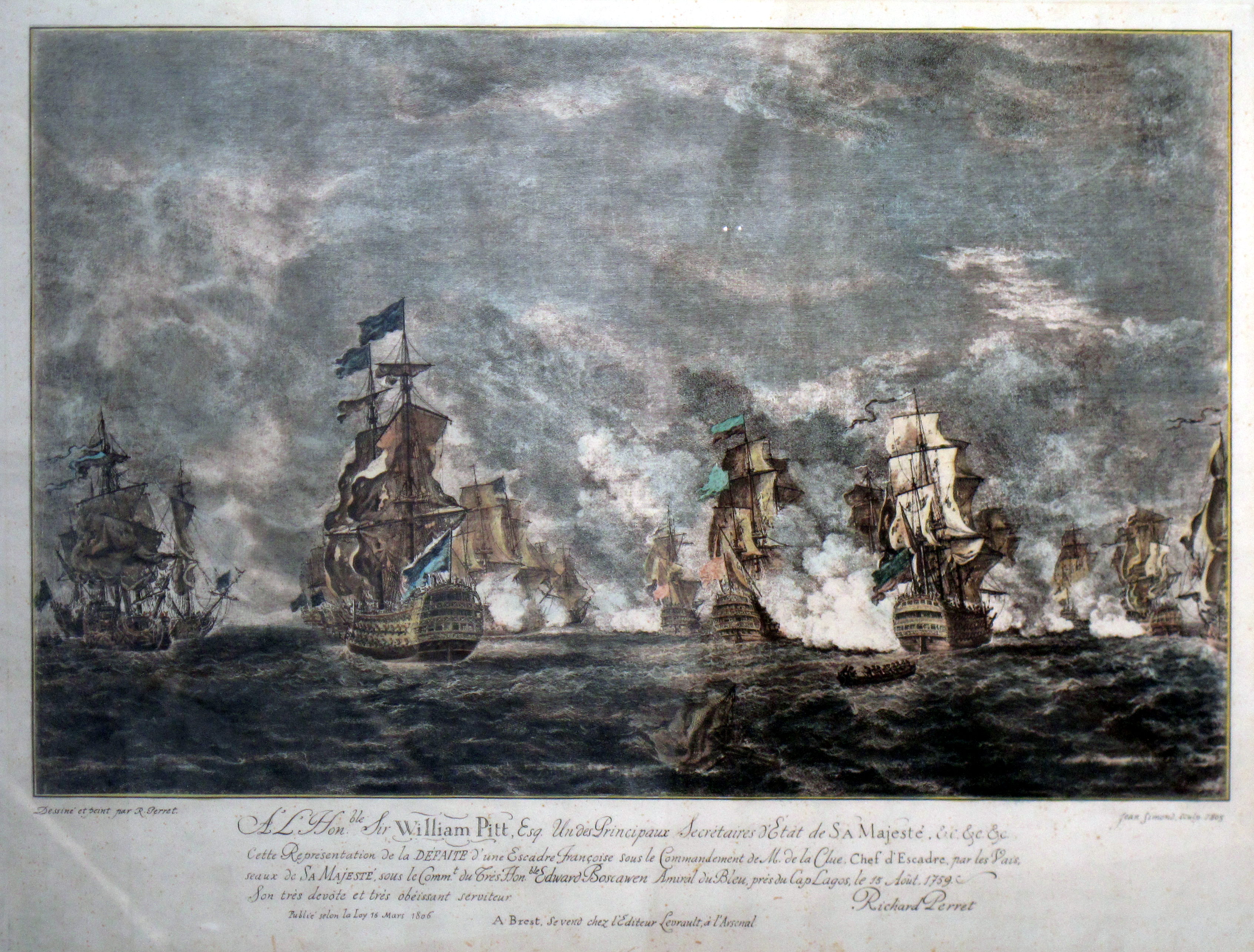
HMS Modeste was a 64-gun third-rate ship of the line of the Royal Navy, originally built for the French Navy and launched in 1759. She was constructed at Toulon, where she was laid down in April 1756 according to a design by Noël Pomet. Launched on 12 February 1759, she was completed by May of that year and initially joined the fleet under Chef d'escadre Jean-François de La Clue-Sabran. During the Seven Years’ War, she participated in the Battle of Lagos off Portugal in August 1759, a significant engagement where the French fleet was decisively defeated by British forces under Admiral Edward Boscawen. In this battle, the French lost two ships and three were captured, including Modeste, along with the larger 74-gun ships Téméraire and Centaure. Captured as a prize at Portsmouth, she was surveyed in December 1759 and purchased into the Royal Navy in January 1760 for approximately £17,068.18.1. She retained her French name, HMS Modeste, and was commissioned later that year. Her initial service included a refit in mid-1760 and command under Captain Henry Speke, soon succeeded by Captain Robert Boyle-Walsingham, who took her to the Mediterranean. There, she participated in naval actions, notably capturing the 32-gun Bouffonne off Cádiz in July 1761. In October 1761, she sailed to the Leeward Islands, where she took part in the reduction of Martinique in early 1762. Subsequently, Captain John Hollwall commanded her until her return to Britain and decommissioning in 1764. After a period laid up, she was recommissioned in 1771 as a guard ship and deployed to Jamaica, returning to Britain in 1772. Later, she served as a receiving ship at Portsmouth from 1778, remaining in this role through the American War of Independence and most of the French Revolutionary Wars. HMS Modeste was ultimately broken up at Portsmouth in August 1800, ending her nearly four decades of service. Her history reflects the typical lifecycle of a mid-18th-century ship of the line, transitioning from active combatant to secondary roles before being decommissioned.
This description has been generated using GPT-4.1-NANO based on the Vessel's wikidata information and then modified by ShipIndex.org staff.