
USS Powhatan
ship built in 1995
Vessel Wikidata
* This information from Wikidata is available under the Creative Commons Attribution-ShareAlike License
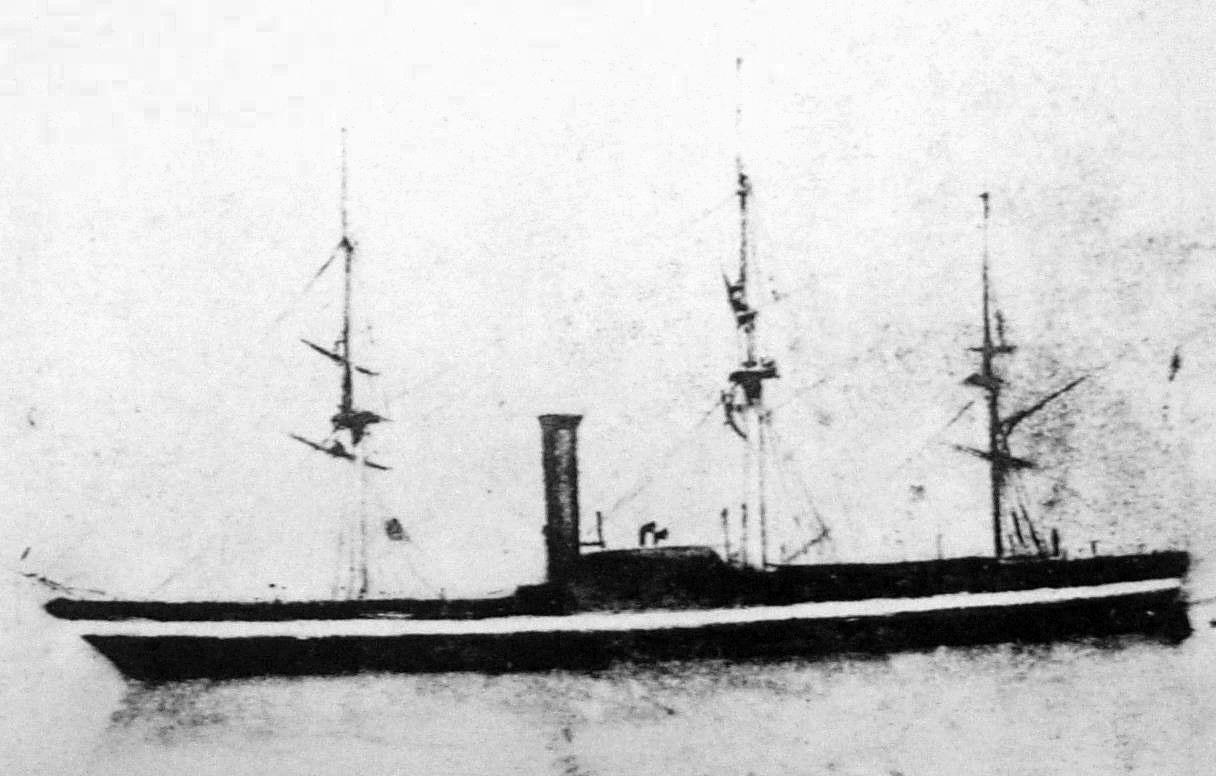
The USS Powhatan was a notable sidewheel steam frigate of the United States Navy, constructed at Norfolk Naval Shipyard (then Gosport Shipyard) with her keel laid on August 6, 1847. Built by Samuel Hartt, her engines were supplied by Mehaffy & Company, and the vessel cost approximately $785,000. Launched on February 14, 1850, and commissioned on September 2, 1852, under Captain William Mervine, the Powhatan was one of the largest paddle frigates ever built by the U.S. Navy. Physically, the USS Powhatan was a prominent paddle frigate, characterized by her sidewheel propulsion system, making her one of the last and largest of her type. She served as the flagship of various squadrons, highlighting her importance and size within the fleet. Her early service included a stint with the Home Squadron, where she visited New York and participated in diplomatic missions to Mexico. Subsequently, she was assigned to the East India Squadron, arriving via the Cape of Good Hope in June 1853. During her time in Chinese waters, she played a significant role in Commodore Matthew Perry's expedition to open Japan, serving as Perry’s flagship during his visit to Whampoa in November 1853 and participating in the signing of the Convention of Kanagawa in March 1854. She also supported surveying operations in Japan and was involved in anti-piracy actions off Kowloon in 1855. The Powhatan was central to several diplomatic events, including the signing of the US-Japan Treaty of Amity and Commerce in 1858 and the voyage of the first Japanese embassy to the United States in 1860, during which she accompanied the Japanese ship Kanrin Maru from Yokohama to San Francisco. During the American Civil War, she served actively, operating off Charleston, assisting in the relief of Fort Pickens, and establishing the blockade of Mobile, Alabama. She captured several vessels and participated in the reduction of Fort Fisher, contributing significantly to Union efforts. Post-war, the USS Powhatan continued her service, navigating the Pacific and South American waters, including protection missions during the Chincha Islands War. She served as flagship in the North Atlantic Squadron and was involved in peacekeeping during the Baltimore Railroad Strike of 1877. Her career concluded with numerous cruises along Cuban waters to safeguard American interests before her decommissioning in 1886. She was sold and scrapped in 1887, leaving a legacy as one of the last and largest paddle frigates of the U.S. Navy.
This description has been generated using GPT-4.1-NANO based on the Vessel's wikidata information and then modified by ShipIndex.org staff.