
USS Gambier Bay
1943 Casablanca-class escort carrier
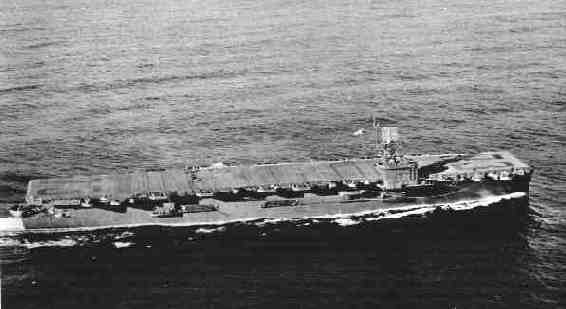
Vessel Wikidata
* This information from Wikidata is available under the Creative Commons Attribution-ShareAlike License
The USS Gambier Bay (CVE-73) was a Casablanca-class escort carrier of the United States Navy, constructed under a Maritime Commission contract and launched by the Kaiser Shipbuilding Company in Vancouver, Washington, on November 22, 1943. She was the 19th carrier delivered in 1943, earning the nickname "Bonus Ship" due to her place in the rapid Kaiser-built series. She was commissioned in December 1943 with Captain Hugh H. Goodwin in command. Designed as a Casablanca-class escort carrier, Gambier Bay measured approximately 512 feet in length with a beam of about 65 feet and a draft of roughly 20 feet. She displaced around 10,900 tons standard and was powered by two steam turbines, capable of reaching speeds up to 19 knots. Her primary role was aircraft transportation, support, and ground attack during amphibious operations. Gambier Bay's service history was marked by active participation in key Pacific campaigns during World War II. After shakedown off San Diego, she transported aircraft and personnel to strategic locations like Pearl Harbor and the Marshalls, and provided close air support during the Battle of Saipan in June 1944. She also supported operations at Tinian, Guam, Peleliu, and the Philippines, including escorting transports and staging for invasion forces. Her most notable engagement was during the Battle off Samar on October 25, 1944, part of the larger Battle of Leyte Gulf. As part of "Taffy 3," she fought against a vastly superior Japanese surface fleet led by the battleship Yamato. Gambier Bay was hit multiple times by Japanese shells, including armor-piercing 18.1-inch shells from Yamato, which flooded her compartments and disabled her steering and fuel systems. Despite her damage, she and her escort carriers engaged in a fierce fight, and her aircraft helped turn back the Japanese Center Force, inflicting significant damage and sinking three cruisers. Gambier Bay was eventually sunk by sustained gunfire from Yamato and other Japanese ships, capsizing at 09:07 and sinking at 09:11, with the loss of 147 crew members. She remains the only American aircraft carrier sunk solely by surface gunfire in WWII. Gambier Bay earned four battle stars for her wartime service and was part of the distinguished "Taffy 3" unit awarded the Presidential Unit Citation for heroism. Her legacy endures as a symbol of resilience and tactical sacrifice in naval history.
This description has been generated using GPT-4.1-NANO based on the Vessel's wikidata information and then modified by ShipIndex.org staff.