
USS Peary
1920 Clemson-class destroyer
Vessel Wikidata
* This information from Wikidata is available under the Creative Commons Attribution-ShareAlike License
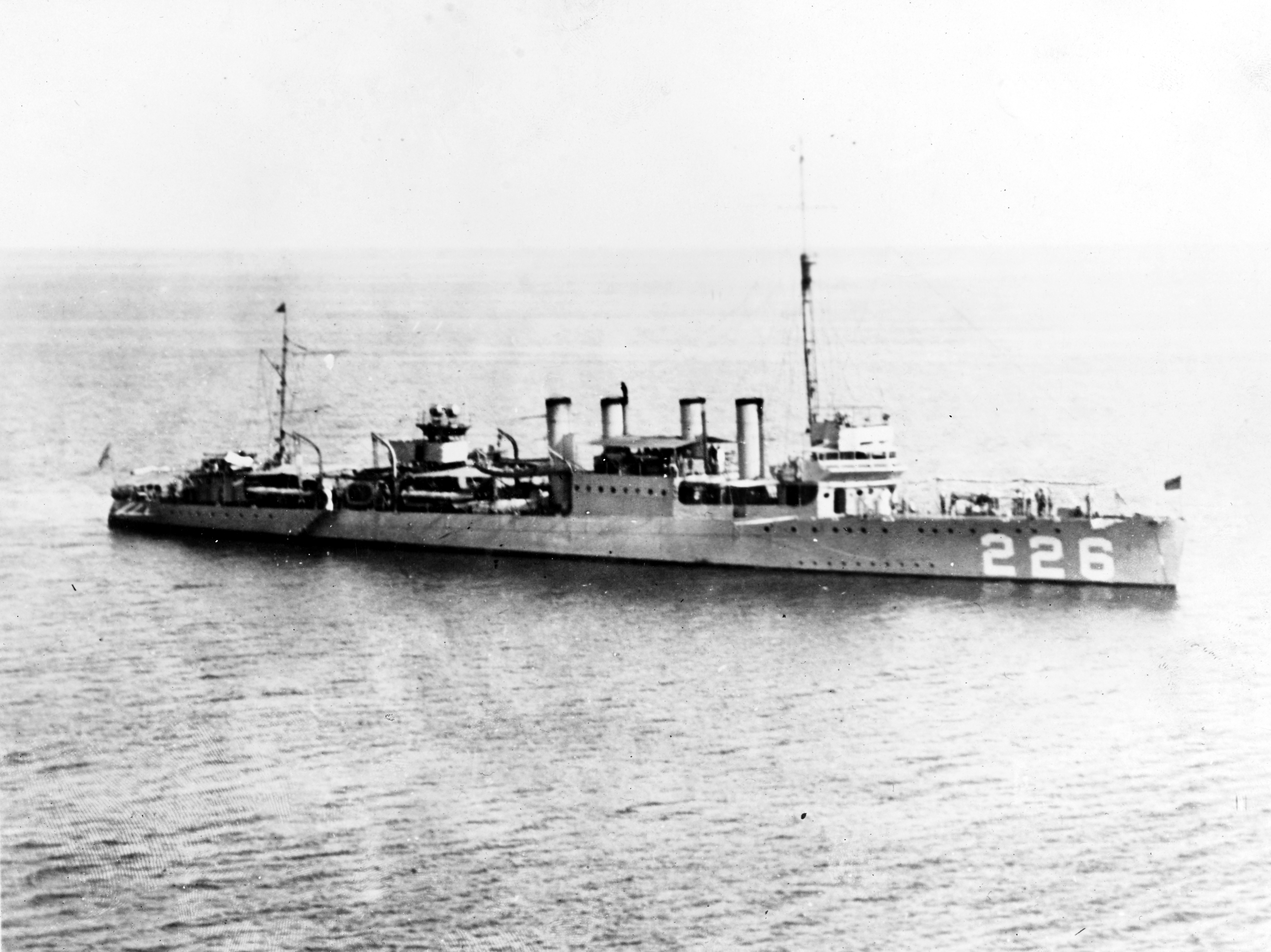
The USS Peary (DD-226) was a Clemson-class destroyer of the United States Navy, commissioned in 1920. Built by William Cramp & Sons in Philadelphia, she was laid down on September 9, 1919, launched on April 6, 1920, and officially commissioned on October 22, 1920. The vessel exemplified the typical Clemson-class design, which featured a flush deck and was armed with torpedoes and guns suitable for destroyer roles during that period. Peary served primarily in the Far East from 1922 onward, including frequent deployments with the Yangtze River Patrol from 1923 to 1931, and continued to protect American interests in Chinese waters until the outbreak of World War II. Her operational history was marked by her presence at Cavite, Philippines, where she was moored during the Pearl Harbor attack. On December 10, 1941, she was bombed by Japanese aircraft during the attack on the Cavite Navy Yard, sustaining damage from a bomb that killed eight crew members and caused structural harm. She was subsequently rescued from fires by USS Whippoorwill and USS Pillsbury. Throughout December 1941, Peary experienced further Japanese air attacks, including near-misses and torpedo threats. In late December, she attempted to evade Japanese patrols by camouflaging herself with paint and foliage, then set course through the Celebes Sea toward Makassar Strait. She was eventually spotted and attacked by Japanese bombers, narrowly avoiding torpedoes during a two-hour attack. By early 1942, Peary was operating out of Darwin, Australia, conducting anti-submarine patrols. On February 19, 1942, during the Japanese air raid on Darwin, she was heavily damaged by five bombs, with explosions igniting ammunition magazines and causing her sinking. She was lost with 88 crew members, including her commanding officer, Commander J. M. Bermingham. The wreck lies in 89 feet of water in Darwin Harbour, serving as a memorial to those who fought and died there. Peary’s final stand and her role in early WWII history make her a significant vessel in American and Australian maritime history.
This description has been generated using GPT-4.1-NANO based on the Vessel's wikidata information and then modified by ShipIndex.org staff.