
HMS Aurora
1936 Arethusa-class light cruiser
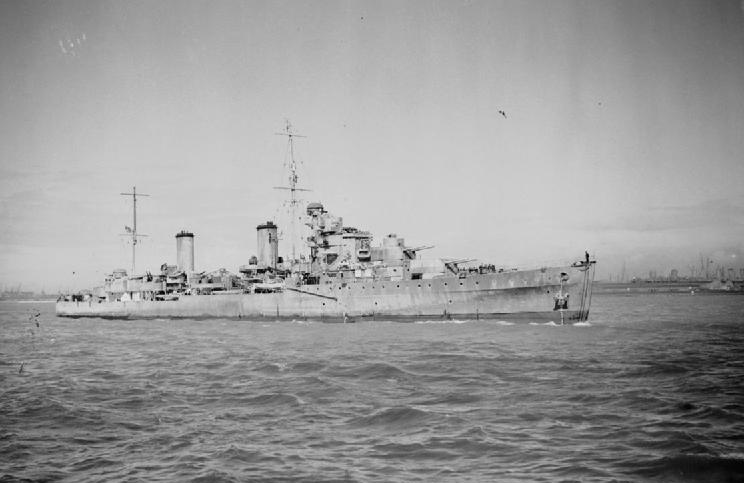
Vessel Wikidata
* This information from Wikidata is available under the Creative Commons Attribution-ShareAlike License
HMS Aurora was an Arethusa-class light cruiser constructed by Portsmouth Dockyard, with her keel laid on 27 July 1935. She was launched on 20 August 1936 and commissioned into the Royal Navy on 12 November 1937. The ship measured approximately 5,000 tons displacement and was armed with a main armament suitable for her cruiser role, though specific armament details are not provided in the source. Aurora's design positioned her as a versatile and swift vessel, capable of escort duties and fleet engagements, characteristic of the Arethusa class. Initially serving with the Home Fleet, Aurora was actively involved in key naval operations during World War II. She participated in convoy escort missions to Scandinavia and was involved in the hunt for the German battleships Scharnhorst and Gneisenau. Under Captain William Gladstone Agnew from October 1940, Aurora took part in the Norwegian Campaign and subsequently in the pursuit of the German battleship Bismarck, intercepting supply ships such as Belchen in June 1941. She also contributed to Operation Gauntlet, which targeted German-held territories in Spitzbergen and Bear Island. Aurora played a notable role in the Battle of the Duisburg Convoy in November 1941, sinking multiple Axis vessels, including the Italian destroyer Fulmine and several transports. In December 1941, Aurora was severely damaged by a mine off Tripoli and had to retreat to Malta for repairs. She later joined Force H and participated in the North African landings (Operation Torch), engaging Vichy French destroyers and supporting the Allied invasions of Sicily and Salerno. Her service in the Mediterranean was marked by combat against Axis supply and evacuation convoys, and she sustained damage from German aircraft during operations in the Aegean Sea. After World War II, Aurora was transferred to the Chinese Navy in 1948, renamed Chongqing, and served as the flagship of the Republic of China Navy. Her service ended in 1949 following a mutiny and subsequent scuttling at Huludao harbor. The vessel was salvaged but stripped and repurposed as a barracks and warehouse ship, undergoing several name changes and plans for refitting that were ultimately canceled. She was scrapped during the Cultural Revolution, with her ship’s bell and name tablet preserved in the Military Museum of the Chinese People's Revolution.
This description has been generated using GPT-4.1-NANO based on the Vessel's wikidata information and then modified by ShipIndex.org staff.