
PS Brighton
Australian ferry

Vessel Wikidata
* This information from Wikidata is available under the Creative Commons Attribution-ShareAlike License
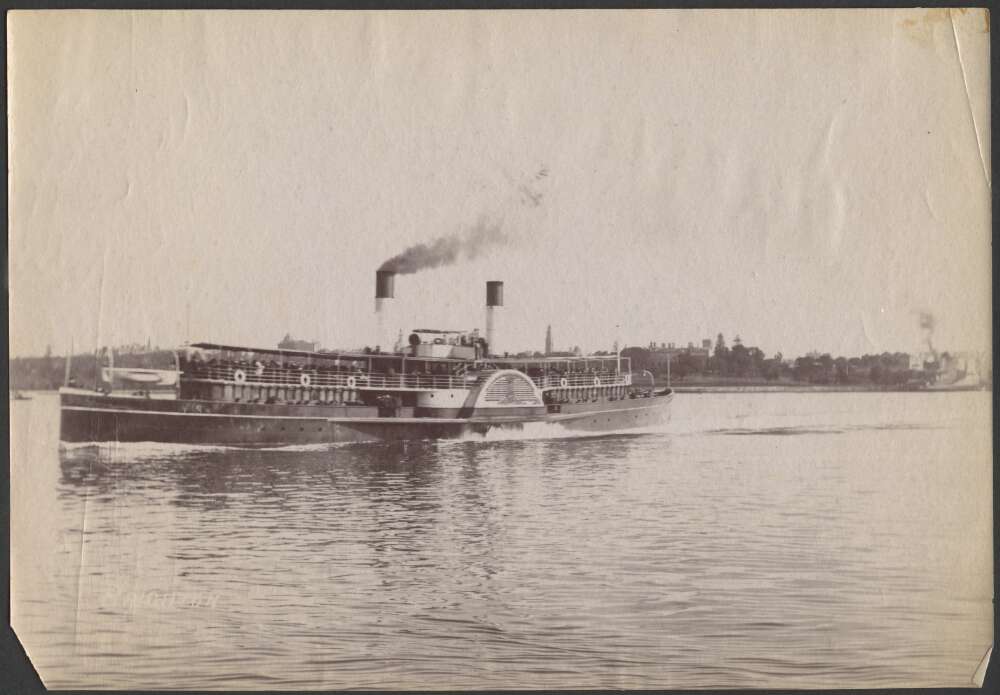
The PS Brighton was a notable paddle steamer constructed in 1883 by T.B. Seath & Co. of Rutherglen, Scotland, specifically for service on the Sydney to Manly route. As the largest paddle steamer to operate on Sydney Harbour at the time, she measured approximately 67 meters in length—comparable to modern Manly ferries—and was renowned for her impressive size and passenger capacity. Designed as a copy of the River Mersey vessels Primrose and Daisy, Brighton featured two A. Campbell & Son compound diagonal oscillating steam engines, initially generating 160 horsepower, later increased to 230 horsepower in the 1890s. These engines powered her paddle wheels, enabling her to reach speeds of up to 15 knots. Brighton was well-appointed and popular among passengers, with features such as velvet-colored seats, singing canaries in cages, and polished brass and timber finishes, making her a luxurious vessel for her era. Her summer passenger capacity was about 1,137, dropping to 885 in winter, reflecting her role as a key transportation link during the late 19th and early 20th centuries. She operated alongside other vessels like Brightside, Fairlight, and various tug-ferries, serving as the last paddle steamer on the Manly run. Her maiden voyage from Scotland was marked by a challenging passage, including rough seas near Colombo that damaged fittings and required the crew to burn planking and cabin doors to maintain steam as she approached Sydney, arriving there on 1 September 1883. Notable incidents in her service include a collision with the steamer Dunmore in 1898, and a more serious accident on 7 August 1900 when she collided with the collier Brunner near Chowder Bay, leading to her grounding on the beach at Chowder Bay and a three-month repair period. Brighton was eventually hulked in 1916, repurposed as a storeship for timber exporters in Port Stephens, where her hull remains abandoned in The Duckhole. Her historical significance is underscored by her being the last paddle steamer on the Manly run and her role in early Australian film history, with a 1896 film capturing passengers disembarking at Manly.
This description has been generated using GPT-4.1-NANO based on the Vessel's wikidata information and then modified by ShipIndex.org staff.