
PS Queen Victoria
Vessel Wikidata
* This information from Wikidata is available under the Creative Commons Attribution-ShareAlike License
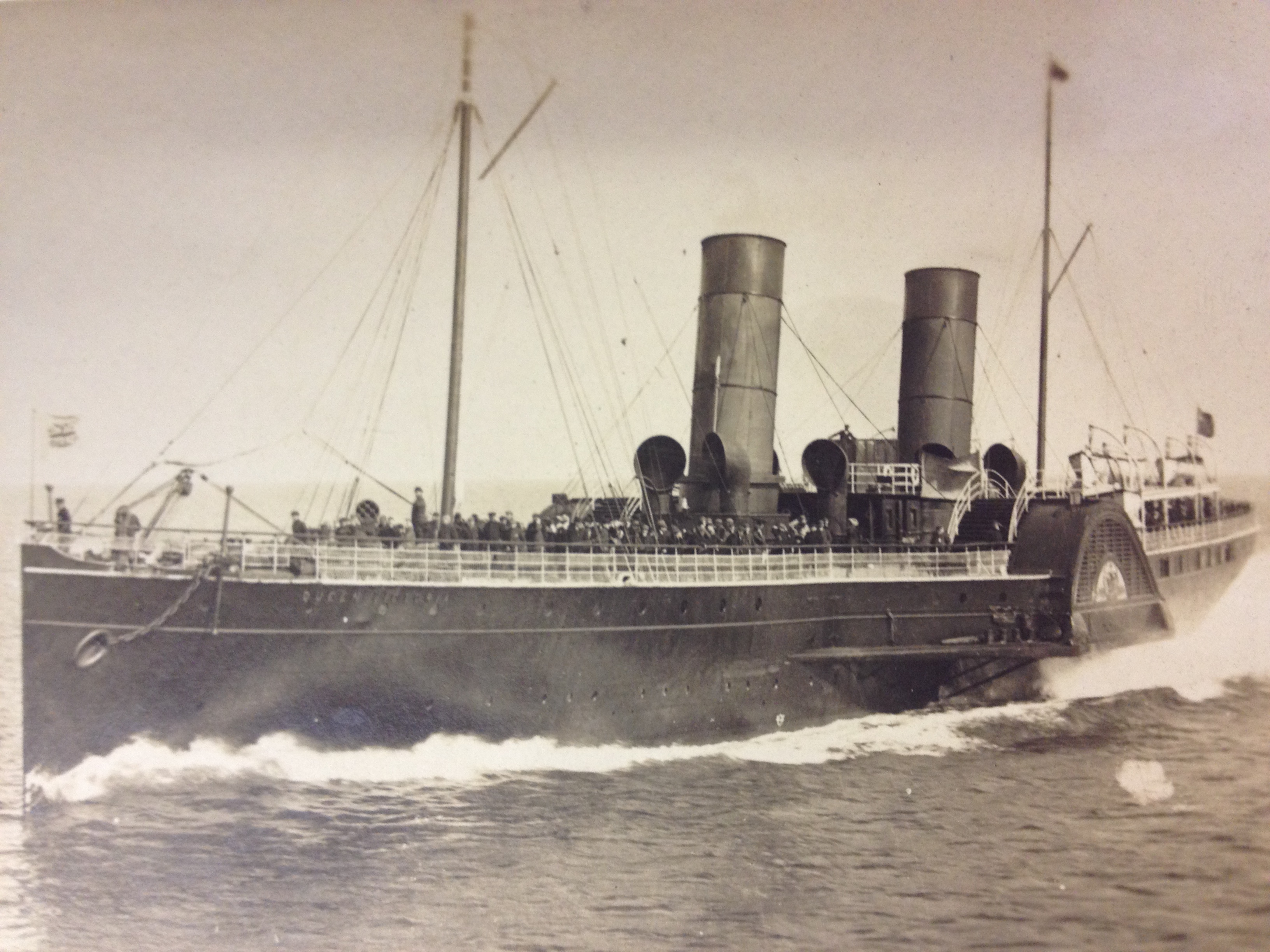
The PS (RMS) Queen Victoria No. 93379 was a steel-hulled paddle steamer constructed by Fairfield Shipbuilding and Engineering Company in Govan, launched on 29 March 1887. The vessel measured 330 feet in length, with a beam of 39 feet 1 inch and a depth of 15 feet 2 inches. She was registered at 1,568 gross register tons (GRT) and was designed to carry up to 1,546 passengers, with a crew of 69 members. Her propulsion system comprised compound engines capable of developing 6,500 indicated horsepower at 40.5 rpm, supplied by boilers operating at a steam pressure of 110 psi. The engines featured a coupled two-crankshaft design, with cylinders measuring 61 and 112 inches in diameter and a 78-inch stroke, which contributed to her notable speed and performance. Originally operating under the Isle of Man, Liverpool and Manchester Steamship Company’s Manx Line, alongside her sister ship PS Prince of Wales, Queen Victoria was built to outperform rival vessels like Mona’s Isle and Mona’s Queen. Her performance was impressive; during her delivery run from Glasgow to Liverpool on 21 May 1887, she averaged 22.5 knots in heavy seas, setting a record for the route. Queen Victoria and her sister quickly gained fame for their speed, often racing with Mona’s Isle, with the Queen Victoria notably winning a race on 19 May 1888 by 32 minutes. Her speed and efficiency helped shape cross-channel and Isle of Man service standards. In 1888, the Isle of Man Steam Packet Company purchased Queen Victoria and Prince of Wales to eliminate competition. She continued service until 17 July 1889 when she collided with the tug Victory in the River Mersey. During World War I, she was requisitioned by the Admiralty in 1915 and converted into a net-laying anti-submarine vessel, operating in the Eastern Mediterranean, including support during the Gallipoli Campaign. After the war, she was sold in 1920 to a Dutch company, Ambacht, for £5,450, and was subsequently broken up. Her service life reflects her importance as a fast passenger vessel and her adaptability for military roles during wartime, marking her as a notable vessel in late 19th and early 20th-century maritime history.
This description has been generated using GPT-4.1-NANO based on the Vessel's wikidata information and then modified by ShipIndex.org staff.