
RMS Tahiti
ocean liner from 1911-1930
Vessel Wikidata
* This information from Wikidata is available under the Creative Commons Attribution-ShareAlike License
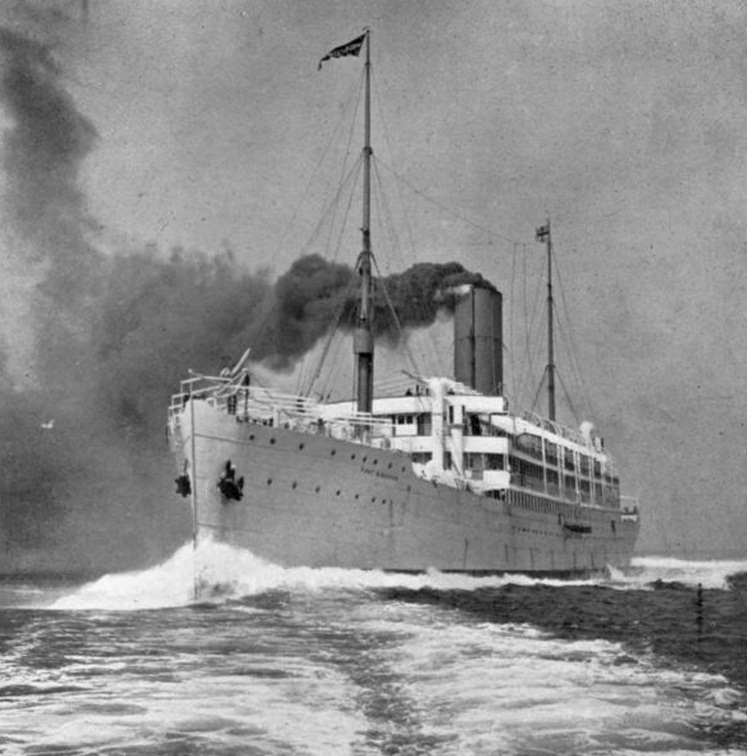
The RMS Tahiti was a versatile and significant vessel in early 20th-century maritime history. Originally launched in 1904 in Scotland as RMS Port Kingston by Alexander Stephen and Sons of Govan, the ship was constructed for the Imperial Direct West Mail Company, a subsidiary of Elder Dempster Lines. She was built as an ocean liner and refrigerated cargo ship, equipped with four decks and capable of accommodating 277 first-class, 97 second-class, and 141 third-class passengers, with a crew of 135. Her refrigerated holds had a capacity of 36,370 cubic feet, enabling her to carry fruit and other perishable cargo. Initially serving the Bristol to Kingston, Jamaica route, Port Kingston was launched on 19 April 1904 and completed that August. She notably survived the 1907 Kingston earthquake, being beached and later refloated. In 1911, she was acquired by the Union Steamship Company of New Zealand, refitted at Bristol, and renamed Tahiti, with her route extended to the trans-Pacific service connecting Sydney, Wellington, Rarotonga, and Tahiti. During World War I, Tahiti was requisitioned as a troopship (HMNZT Tahiti), participating in significant military transport operations, including the Gallipoli campaign. She notably transported the first casualties from Gallipoli to Wellington in 1915. Her service during the war was marred by a devastating outbreak of Spanish flu in 1918-1919, which resulted in the deaths of 68 men aboard her after a voyage from Freetown to England. The outbreak was exacerbated by overcrowding and poor ventilation. Post-war, Tahiti returned to commercial service, converting her furnaces from coal to oil in 1920. She continued her route services, but her career was marked by two notable incidents: a collision with the ferry Greycliffe in Sydney Harbour in 1927, which resulted in 40 fatalities, and her sinking in 1930. On 15 August 1930, while about 480 nautical miles southwest of Rarotonga, she suffered a broken starboard propeller shaft that caused flooding and ultimately led to her sinking on 17 August 1930. The sinking was attributed to the failure of the propeller shaft, which tore through a bulkhead, causing uncontrollable flooding. The ship was abandoned with no loss of life, and a court of inquiry praised her master and crew for their resourcefulness and bravery. The RMS Tahiti remains a notable vessel for her varied service history and her role during wartime crises.
This description has been generated using GPT-4.1-NANO based on the Vessel's wikidata information and then modified by ShipIndex.org staff.