
SS Sarpedon
cargo liner of the Blue Funnel Line
Vessel Wikidata
* This information from Wikidata is available under the Creative Commons Attribution-ShareAlike License
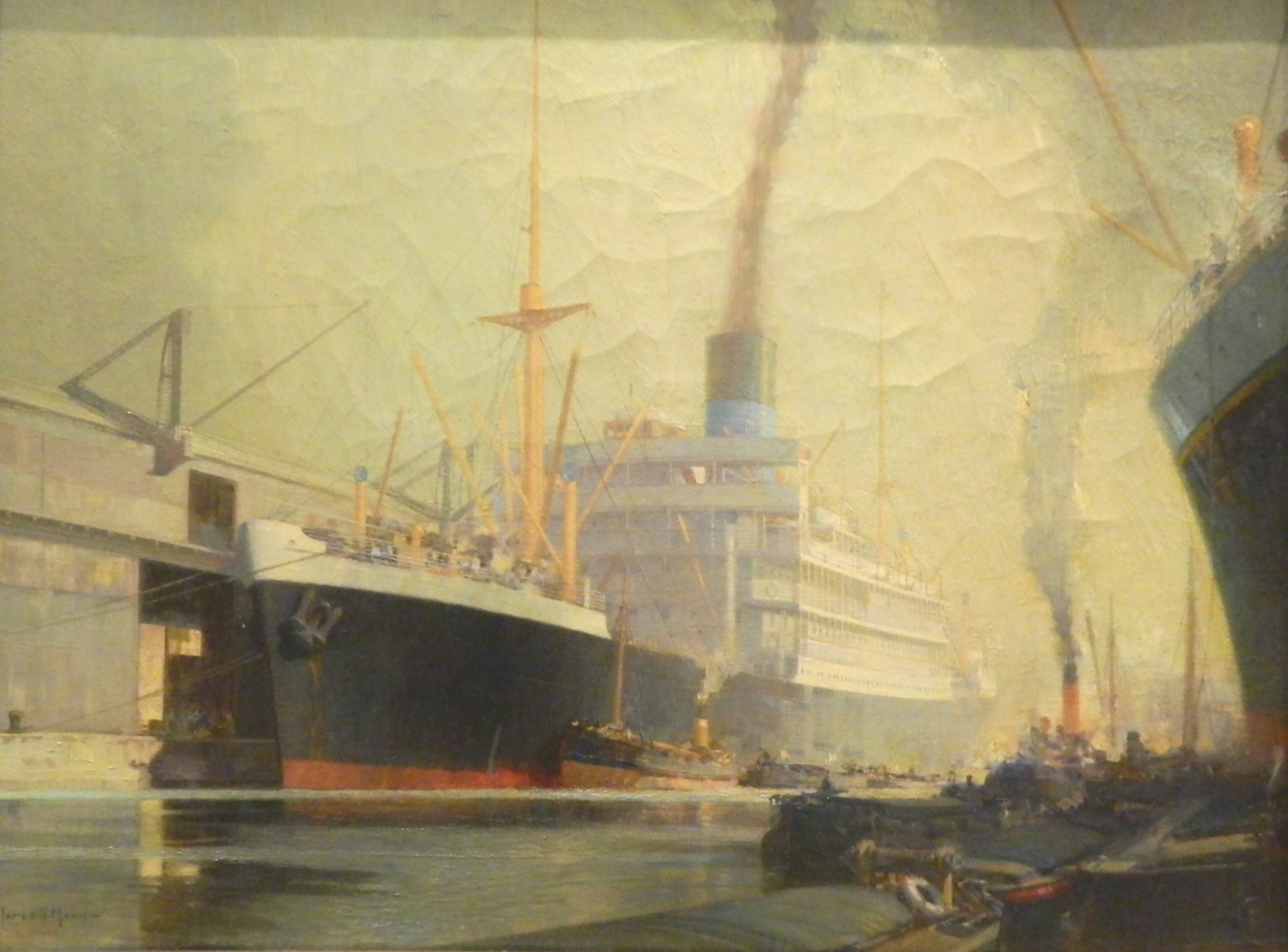
The SS Sarpedon was a UK-flagged steam turbine passenger and refrigerated cargo liner launched in 1923 by Cammell, Laird & Co in Birkenhead, England. She was designed primarily for service between Liverpool and the Far East, accommodating 155 first-class passengers, reflecting the British shipping company's focus on luxury and long-distance trade. Measuring 499.0 feet (152.1 meters) in length, with a beam of 62.3 feet (19.0 meters) and a depth of 34.9 feet (10.6 meters), the vessel featured a single funnel, two masts, a slightly raked stem, and a counter stern. Her tonnages were 11,321 GRT and 6,921 NRT. Propelled by four steam turbines driving twin screws through single-reduction gearing, the Sarpedon achieved a service speed of approximately 15 knots. Her design included modern navigational equipment, with her sister ship Patroclus notably fitted with wireless direction finding by 1934. During peacetime, Sarpedon maintained a regular route between Liverpool and the Far East, operating alongside her sister ships Hector, Antenor, and Patroclus—named after characters from Homer’s Iliad. Unlike her sister ships, which were requisitioned as armed merchant cruisers during World War II, Sarpedon remained in civilian service throughout the conflict, sometimes sailing unescorted and sometimes in convoys. She participated in notable convoy operations, including HX 144 in August 1941 and HX 185 in April 1942 from Halifax to Liverpool. Her wartime voyages took her as far as Australia and Papua, with stops at Port Moresby shortly before the Japanese invasion of New Guinea. She also transited the Panama Canal in late 1942 and early 1943, and later passed through the Suez Canal in 1944. Sarpedon’s service concluded shortly before the end of the war, with her final convoy, MKS 93G, departing Casablanca in April 1945 and arriving in Liverpool in April 1945. She and her sister Antenor were among the few of her class to survive the war. She was eventually scrapped in Newport, Wales, in 1953. Her ship’s bell remains preserved at Our Lady and Saint Nicholas Parish Church in Liverpool, serving as a historical relic of her maritime legacy.
This description has been generated using GPT-4.1-NANO based on the Vessel's wikidata information and then modified by ShipIndex.org staff.