
USS Knickerbocker
minesweeper of the United States Navy
Vessel Wikidata
* This information from Wikidata is available under the Creative Commons Attribution-ShareAlike License
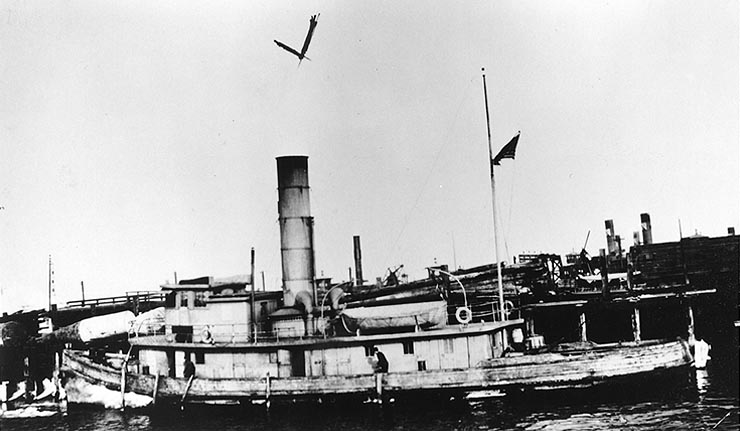
The USS Knickerbocker (SP-479) was a versatile vessel serving the United States Navy during World War I from 1917 to 1919. Originally built in 1873 by Neafie & Levy in Philadelphia as a commercial tug, she underwent a rebuild in 1904, which likely modernized her structure and capabilities. The vessel was owned by the Cornell Steamboat Company of New York City before being leased by the Navy on May 2, 1917, amid the wartime expansion of U.S. naval forces. Subsequently, the Navy purchased her outright on September 13, 1917, and commissioned her as USS Knickerbocker (SP-479) on September 22, 1917, in New York City. Constructed primarily as a tug, the Knickerbocker was adapted for multiple roles including minesweeping and dispatch duties, reflecting her versatility within the naval fleet. She was assigned to the 3rd Naval District, where she operated on the Hudson River and in New York Harbor. Her duties included minesweeping, tug operations, and dispatch service, supporting naval activities in the vital New York area. In March 1918, the vessel was ordered to be stricken from the Navy List due to poor material condition, but her valuable harbor services led to her retention. Reinstated in April 1918, she continued her duties, notably serving as a tender to the training and guard ship USS Amphitrite, and as a dispatch ship from December 30, 1918. Her service concluded with her decommissioning on February 18, 1919, after which she was sold to private interests. The USS Knickerbocker's service highlights her adaptability and importance in harbor operations during the wartime period, despite her older construction and material limitations.
This description has been generated using GPT-4.1-NANO based on the Vessel's wikidata information and then modified by ShipIndex.org staff.