
HMS Victory
1737 first-rate ship of the line
Vessel Wikidata
* This information from Wikidata is available under the Creative Commons Attribution-ShareAlike License
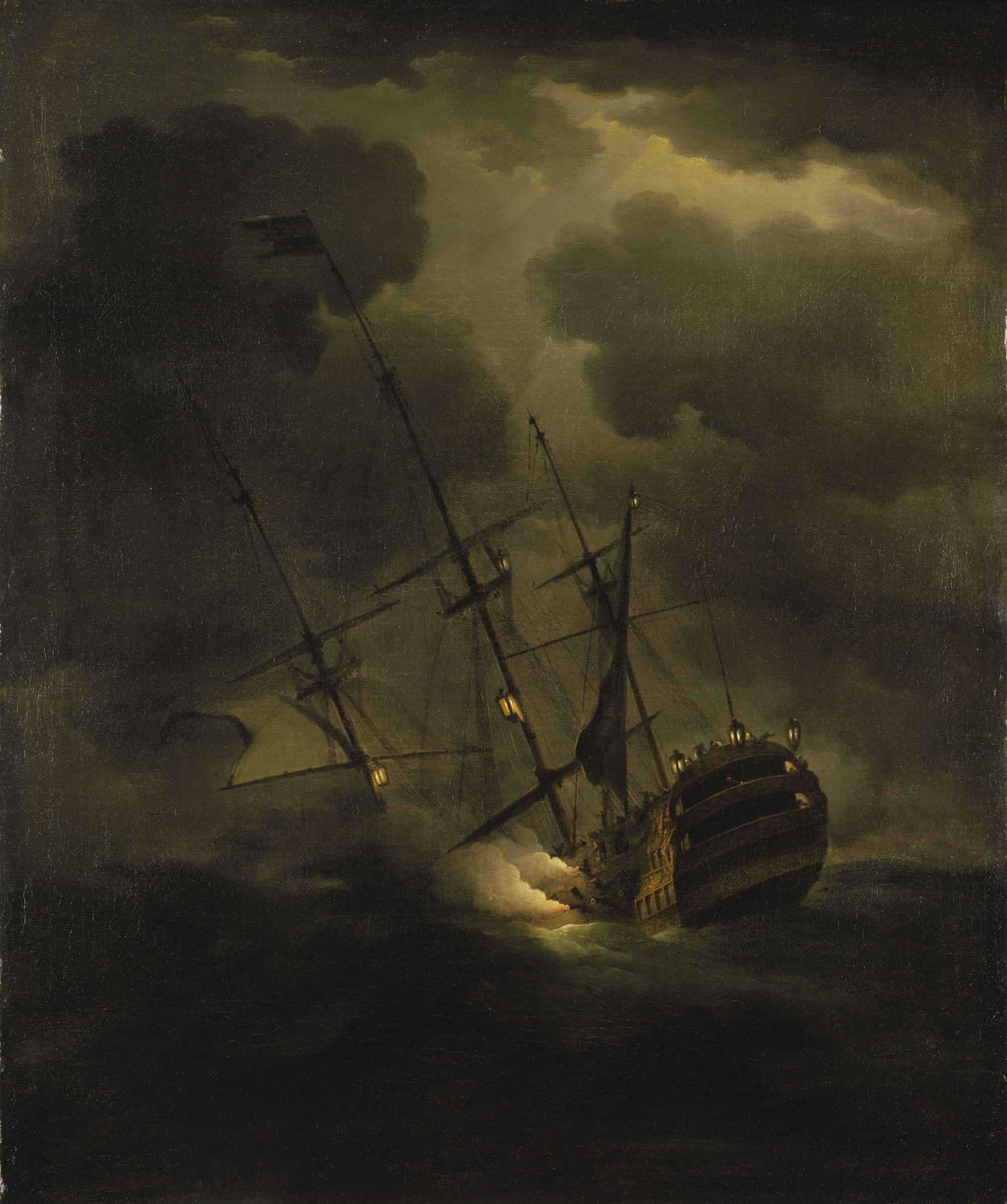
HMS Victory, launched on 23 February 1737, was a formidable first-rate ship of the line of the Royal Navy, armed with 100 bronze cannons. Constructed at Portsmouth Dockyard, she was built to the dimensions prescribed by the 1733 proposals of the 1719 Establishment, with some timbers sourced from the previous HMS Victory that was lost to fire in 1721. The vessel was a large, high-sided ship designed for maximum internal capacity, featuring four stern galleries, three open balconies along her stern, and four quarter galleries—features that enhanced crew conditions but compromised her stability in rough seas. Her design reflected a dispute between the Surveyor of the Navy and her master shipwright, Joseph Allin, with Allin opting for a more spacious and ornamented structure contrary to the instructions for a low and snug upper works. Her dimensions included 28 guns on each of her two main gundecks, with additional unused gun ports aft of the middle deck. Notably, she was the last British first rate to be fully armed with bronze cannons, including a rare 42-pounder crafted by Andrew Schalch. These bronze weapons marked the end of an era, replaced in subsequent ships by iron cannons for cost reasons. HMS Victory served as the flagship of the Channel Fleet under Sir John Norris after her completion in 1740. Her service was marked by her role in naval operations during the early 1740s, but her career ended tragically. While returning to England as flagship of Admiral Sir John Balchen after a blockade in the Tagus, she was lost in a storm in October 1744 near the Channel Islands. The entire crew perished, and for over two centuries, her wreck was believed to have been near the Casquets at Black Rock. However, in 2008, her remains were discovered in the Western Approaches, more than 80 km from her presumed location. The wreck, lying at approximately 100 meters depth, has yielded artifacts including bronze cannons, some of which are now displayed at Portsmouth Historic Dockyard. HMS Victory's sinking possibly involved transporting valuable cargo, including gold and silver bullion from Lisbon, and her wreck remains a significant maritime archaeological site, offering insights into 18th-century naval warfare, shipbuilding, and the history of the Royal Navy.
This description has been generated using GPT-4.1-NANO based on the Vessel's wikidata information and then modified by ShipIndex.org staff.